
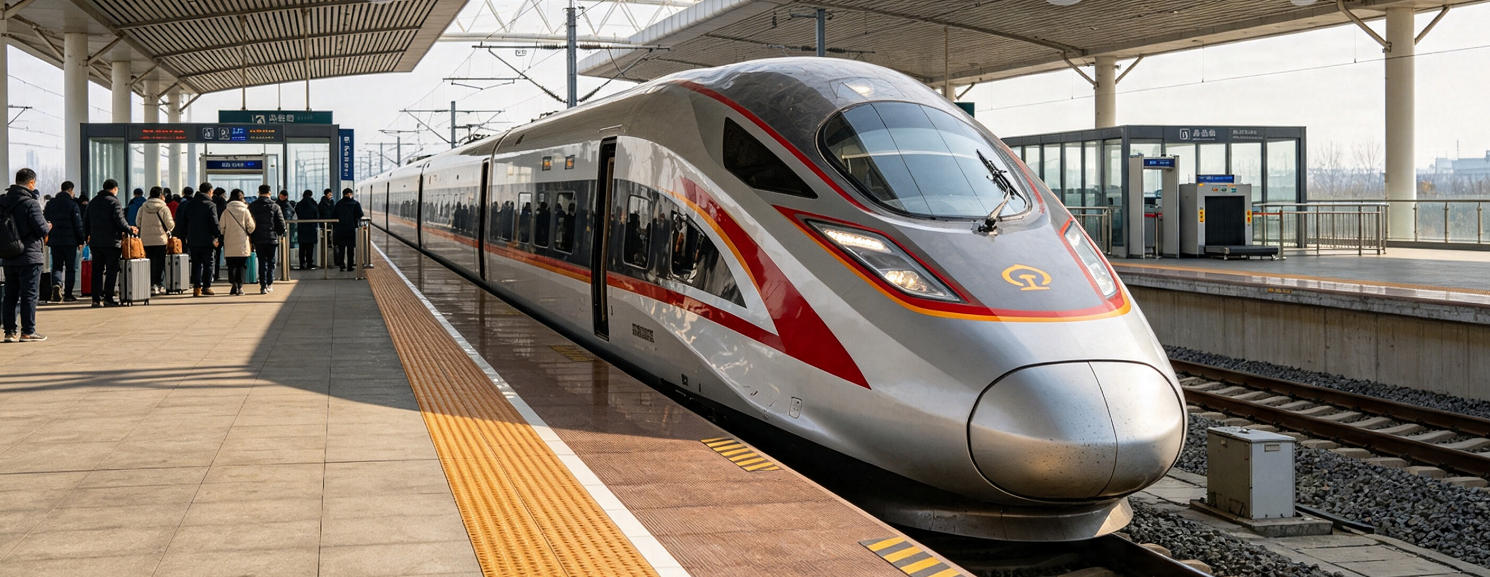
Preparation Before Arriving at the Station
Key Items to Carry: Keep your valid passport (the one used by the travel agency for ticket booking) and the e-ticket confirmation voucher. The confirmation voucher, usually sent by the travel agency, contains crucial details like the departure station, train number, departure time, carriage number, and seat number. You can save it on your phone or print a paper copy.
Arrive on Time: Reach the correct departure station at least 50 minutes before the train departs. If your trip starts from Hong Kong West Kowloon Railway Station, arrive 70 – 80 minutes earlier to finish customs procedures for both Hong Kong and the Chinese mainland. Note that many cities have multiple railway stations (e.g., Beijing has Beijing South Station and Beijing West Station), so double-check the station name on your confirmation voucher.
Entering the Station and Passing Security
Go Through Manual Inspection Channel: Automatic gates are mainly for passengers with Chinese ID cards. As a foreigner, head to the manual inspection channel near the entrance (usually next to the automatic gates, marked with signs like “Manual Check” or “Passport Verification”).
Verify Documents: Show your passport and e-ticket confirmation to the staff. They will scan your passport or input the passport number to verify the e-ticket information. Once verified, you will be allowed to enter.
Security Check: Put your luggage on the X-ray scanner and walk through the metal detector, just like in airports. Liquids and sharp objects follow common public transport rules—avoid carrying large-capacity flammable or explosive items.
Finding the Waiting Hall
Locate Information Screens: After passing security, look for large electronic information screens in the hall. These screens display train numbers, corresponding waiting halls, and departure status in both Chinese and English.
Follow Directional Signs: Railway stations have clear directional signs. Look for signs with “Waiting Hall” and the number. You can also use the station map (available at service desks) or ask staff for help if you are unsure. Some major stations have staff who can communicate in basic English.
Wait in the Designated Area: Once in the waiting hall, find a seat near the boarding gate marked on your e-ticket. Listen for broadcast announcements and watch the screen for any changes to the boarding gate.
Boarding the Train
Prepare for Boarding: Boarding gates open 15 – 20 minutes before departure and close 5 minutes before departure. When the boarding announcement is made, go to the designated boarding gate.
Re-verify Before Boarding: Staff at the boarding gate may re-check your passport to confirm it matches the e-ticket. Cooperate with their inspection.
Find Your Carriage and Seat:
After entering the platform, look for the carriage number marks on the platform floor or the outside of the train. Once on the train, find your seat—seat numbers are labeled on the top of the seat backs or the armrests. The seat class and number are on your e-ticket confirmation.
During the Journey
Ticket Check: Train attendants may check tickets during the trip. Keep your passport handy to show them along with the e-ticket confirmation if required.
Facility Usage: High-speed trains are well-equipped. Power sockets are available next to each seat. Restrooms are at both ends of the carriage, and some long-distance trains have dining cars where you can buy meals, snacks, and drinks. Free Wi-Fi is also provided on most trains.
Exiting the Station
Gather Belongings: When the train arrives at your destination, collect all your luggage to avoid leaving anything behind.
Exit Through Manual Channel: After getting off the train, follow the signs for “Exit”. Again, use the manual inspection channel. Show your passport to the staff for final verification.
Complete Exit: Once the staff confirms the information is correct, you can exit the station smoothly. If you need to take a taxi or public transport, you can show the station name on your confirmation voucher to the driver.