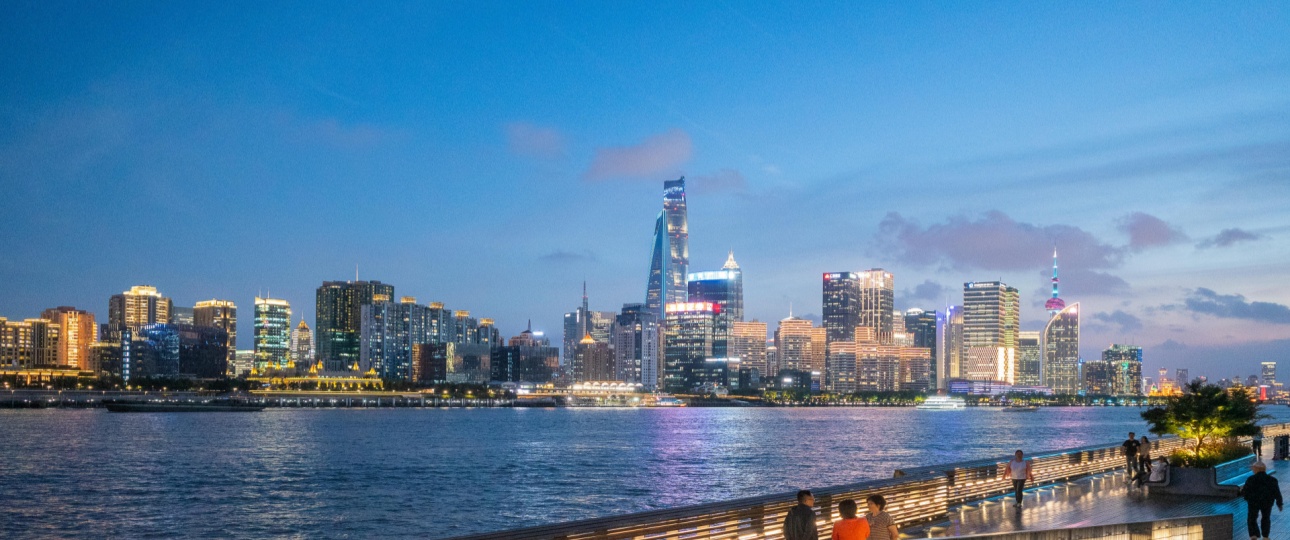
12 Days through Jiangnan’s (Southeast China)Timeless Elegance
Overview
From Silk to Tea, From Gardens to Calligraphy: A Slow Pilgrimage Through China’s Most Refined Landscapes.
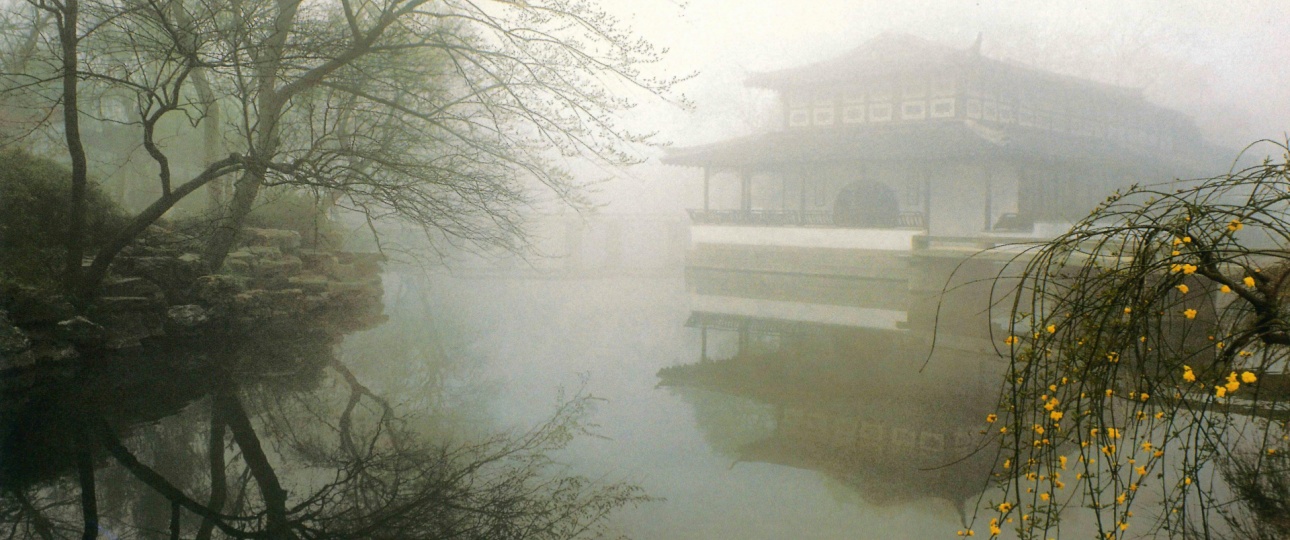
There is a phrase the Chinese use: Shuimo Jiangnan — “Jiangnan painted in ink wash.” It evokes a world where water and mist blur the edges of things, where whitewashed walls dissolve into still canals, where the scent of jasmine tea drifts through carved moon gates, and where the clack of a weaver’s shuttle is the loudest sound for miles.
This is not the China of skyscrapers and expressways. This is the China that poets and painters spent lifetimes trying to capture — a quiet, water-bound world of canal towns and silk workshops, of tea terraces veiled in morning fog, of bamboo groves swaying above Buddhist caves, and of gardens so meticulously composed that every borrowed view, every rock, every shadow is deliberate.
Over 12 unhurried days, we trace a linear arc from Nanjing to Shanghai via Wuzhen, Suzhou, Nanxun, Anji, and Hangzhou. You will walk the canals that built Ming-dynasty fortunes, learn the 24-step art of Suzhou silk embroidery, sip Dragon Well tea on the terraces where it is grown, lose yourself in Anji’s vast bamboo wilderness, and drift to sleep above a lantern-lit waterway in Nanxun’s ancient Hundred-Room Pavilion.
There are no rushed bus transfers, no staged performances, and no shopping stops. Just water, ink, silk, tea, bamboo, and time — a slow, elegant pilgrimage through China’s most beautiful region, with only one extended transfer (Day 3, approximately 2.5–3 hours by private vehicle) across the entire journey.
Trip Highlights
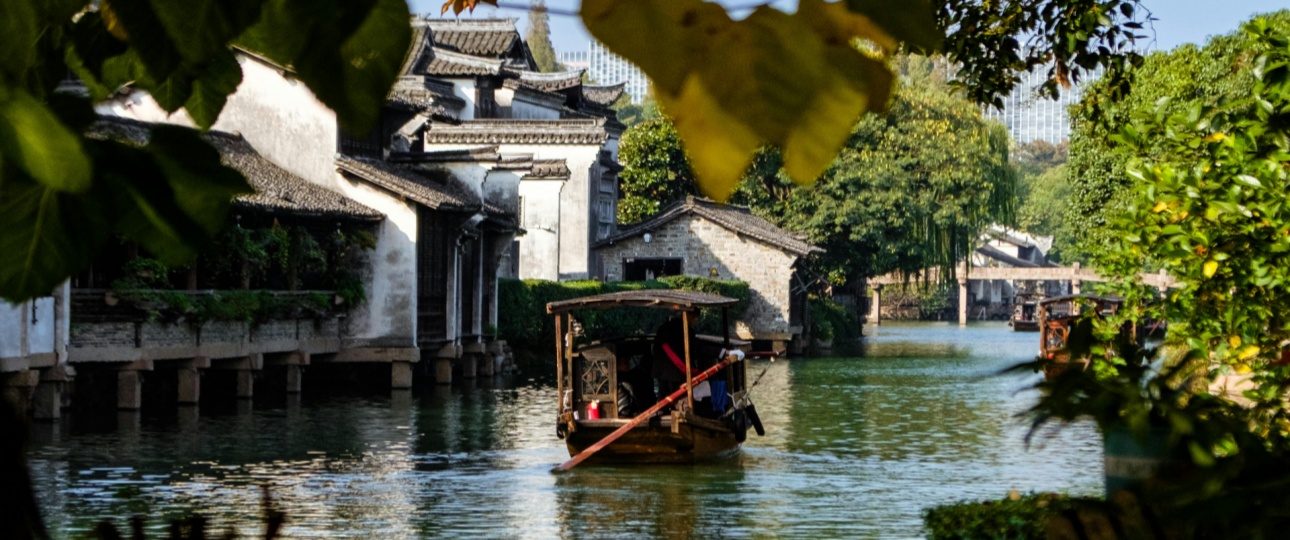
- Cruise midnight canals in a lantern-lit gondola through Wuzhen Water Town's ancient waterways, where stone bridges arch over dark water and the only light spills from paper lanterns and old teahouse windows
- Cross West Lake on a traditional hand-rowed boat at golden hour, tracing the same causeways and pagodas that Marco Polo once described
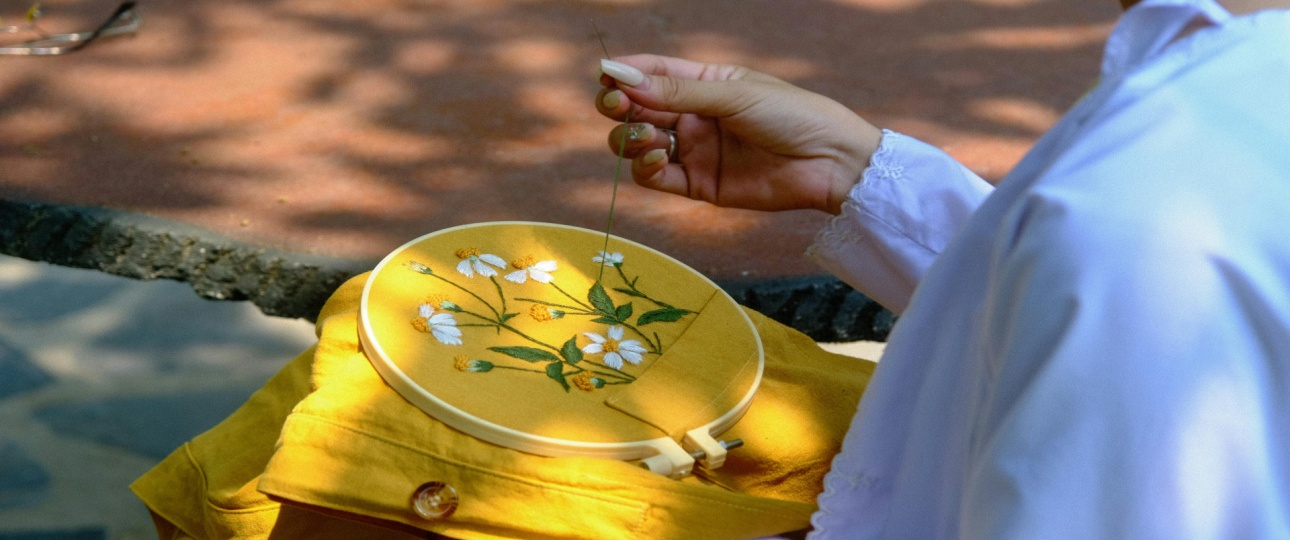
- Learn the 24-step art of Suzhou silk embroidery in a private workshop with a master craftswoman whose family has produced silk since the Ming Dynasty — and take home your own small embroidered piece
- Pick and pan-roast Dragon Well tea leaves on a Longjing Village terrace overlooking Hangzhou, then brew and taste the tea with the farmer who grew it
- Walk into a living ink-wash painting at Nanxun Water Town's Hundred-Room Pavilion — a Ming-era covered causeway of riverfront dwellings stretching along a quiet canal, free to enter and blissfully overlooked by mass tourism
- Lose yourself in bamboo that touched the sky — Anji's thousand-hectare bamboo forest, the largest in China, where Tang-dynasty poets found their muse and Ang Lee filmed Crouching Tiger, Hidden Dragon
- Explore China's oldest surviving public garden by dawn light — Suzhou's Canglang Pavilion, built in 1044 CE, whose window lattices frame poetry written in stone before anyone enters
- Venture into Buddhist stone-carved grandeur — the Qixia Temple and Thousand Buddha Caves on Nanjing's Qixia Mountain, where celestial beings and lotus petals are cut deep into limestone, and where certain chambers ask only for silence, not cameras
- Shop unhurriedly along Nanjing Road on your final full day — Shanghai's most legendary commercial street, walking distance from your historic Bund-front hotel
- All intercity transfers by modern high-speed rail with private vehicle support for water town, bamboo forest, and countryside access — the single longest transfer (Nanjing to Wuzhen, Day 3) is approximately 2.5–3 hours by private vehicle; all other daily transit is strictly within 2 hours
Itinerary
Nanjing (2 nights) → Wuzhen (1 night) → Suzhou (3 nights) → Nanxun (1 night) → Hangzhou (3 nights) → Shanghai Departure (1 night)
Days 1–2 · Nanjing — The Imperial Capital of Six Dynasties
Touch down at Nanjing Lukou International Airport, where a private driver awaits. A restful first day eases jet lag. On Day 2, begin gently with the vast collections of the Nanjing Museum — China's second-largest — and an afternoon among the stone-cut Buddhas and autumnal red leaves of Qixia Mountain and Thousand Buddha Caves, where certain chambers ask only for silence, not cameras.
Days 3–4 · Wuzhen Water Town → Suzhou — The Venice of the East
Morning private transfer to Wuzhen Water Town. Spend the day walking stone bridges, exploring artisan workshops (indigo dyeing, hand-weaving, brewing), and falling asleep to the sound of canal water against old stone. On Day 4, transfer to Suzhou, where you will lose an afternoon in the Ming-dynasty elegance of the Master of the Nets Garden and learn the intricate craft of silk embroidery with a master craftswoman.
Days 5–6 · Suzhou — Gardens, Silk & Ancient Streets
Dawn light at Canglang Pavilion — China's oldest surviving public garden. Then a visit to the Suzhou Silk Museum, followed by free time on Pingjiang Road, an 800-year-old flagstone street lined with tea houses and artisan shops. On Day 6, explore Panmen Gate Scenic Area's ancient city walls and the Humble Administrator's Garden — the largest and most celebrated classical garden in China — before a twilight canal boat ride.
Days 7–8 · Anji & Nanxun — Bamboo Wilderness & Hidden Water Town
Journey south by private vehicle to Anji's thousand-hectare bamboo forest, walking elevated boardwalks among impossibly tall green stalks. After a restorative pause by Huzhou's Taihu Lake, continue east to Nanxun Water Town, where the Ming-era Hundred-Room Pavilion arcs along a quiet canal. After day visitors leave, paper lanterns flicker on, shadows ripple across dark water — and the only sound is the creak of old wooden doors. Sleep in a canal-front guesthouse. On Day 8, a relaxed morning in Nanxun before visiting the Shanjian Lake Brush Workshop and continuing to Hangzhou.
Days 9–11 · Hangzhou — Tea Terraces & West Lake
Learn to pick and pan-roast Dragon Well tea on a Longjing Village terrace. Cruise West Lake at golden hour on a traditional hand-rowed boat. Walk the ancient temple path to Lingyin Temple, now free to enter. On Day 10, high-speed rail to Shanghai, followed by a free afternoon on Nanjing Road. On Day 11, enjoy a full free day for independent exploration, shopping, and a farewell dinner.
Day 12 · Shanghai Departure
A final morning at leisure before a private transfer to Shanghai Pudong International Airport (PVG).
Your private chauffeur will be waiting at Nanjing Lukou International Airport (NKG) holding a name sign. The transfer to your hotel is approximately 45 minutes. No activities are scheduled today. After a transpacific flight, rest and recovery are paramount. A gentle welcome dinner featuring Huaiyang cuisine — Nanjing salted duck, delicate soup buns, and pan-fried niangao — is available at the hotel.
Accommodation: The Westin Nanjing Xuanwu Lake (a five-star international-brand hotel beside Xuanwu Lake, operated by Marriott, fully operational as verified by 2025–2026 service procurement records)
Meals Included: Welcome Dinner
After a leisurely breakfast, visit Nanjing Museum (free entry, advance reservation required via the official WeChat mini-program, open Tuesday–Sunday 09:00–17:00, closed Mondays). One of China's largest and most comprehensive museums, its collections span the Neolithic to the Republican era — essential context for understanding Jiangnan's cultural depth.
In the afternoon, journey to Qixia Mountain and Thousand Buddha Caves (approximately 40 minutes from city center, open 07:00–17:00, Qixia Temple open 08:00–16:00, admission ¥50 standard / ¥80 during Red Maple Festival). The Qixia Temple, founded in 489 CE, has undergone major renovation. The adjacent Thousand Buddha Caves contain 294 niches and 515 stone Buddha statues carved into the cliff face — celestial beings, lotus petals, and bodhisattvas cut deep into the limestone, their expressions still vivid after 1,500 years.
Note to our guests: Photography is not permitted in certain sections of the Thousand Buddha Caves (particularly the large niche areas). We consider this a gift, not a restriction — without the distraction of cameras and screens, you are free to sit in silence, observe the expressions of 1,500-year-old bodhisattvas, and let the cool limestone air work its quiet spell.
If traveling in autumn, the maple leaves turn the entire mountain crimson — a spectacle celebrated in Chinese poetry for centuries. Peak viewing at Qixia Mountain typically falls from mid-November through early December, coinciding with the annual Red Maple Festival (admission adjusts to ¥80 during this period).
Accommodation: The Westin Nanjing Xuanwu Lake
Morning private transfer to Wuzhen Water Town (approximately 2.5–3 hours — this is the single longest transfer of the entire journey). Wuzhen is one of China's most celebrated water towns, with a history spanning over 1,300 years. The West Scenic Zone (Xizha) preserves Ming and Qing dynasty architecture, with waterways serving as streets, arched stone bridges, and wooden houses built on stilts over the canals. Xizha is open daily 09:00–22:00, with night illumination until approximately 22:30–23:00 . Guests staying at hotels within the scenic zone enjoy complimentary entry to Xizha .
Spend the afternoon walking the flagstone lanes, visiting traditional artisan workshops (indigo cloth dyeing, hand-weaving, brewing), and watching the slow rhythm of canal life.
Evening: After daytime crowds disperse, the West Scenic Zone transforms. Take a quiet, private canal boat ride after dark, when the water stills and the only light comes from paper lanterns and old teahouse windows.
Accommodation: Waterside Resort Wuzhen (within Xizha Scenic Zone) or similar boutique water-town lodging, with scenic zone entry included
Morning transfer to Suzhou (approximately 1.5 hours by private vehicle). Suzhou is the classical heart of Jiangnan — a city whose gardens, silk, and canals have defined Chinese aesthetic ideals since the Tang Dynasty.
In the afternoon, visit the Master of the Nets Garden (Wangshi Yuan) (open daily 07:30–17:00, admission ¥40 peak / ¥30 off-peak) . This UNESCO World Heritage site is the smallest of Suzhou's great gardens but considered the most perfectly composed — a masterpiece of spatial illusion where every borrowed view, every rock, every shadow is deliberate. Time-permitting, the evening garden music performances here offer an intimate experience few visitors schedule.
Late afternoon, a private Suzhou silk embroidery workshop. Under the guidance of a master craftswoman whose family has produced silk since the Ming Dynasty, you will learn the basics of su xiu — the 24-step art of silk embroidery — and create a small piece to take home.
Accommodation: InterContinental Suzhou (a five-star landmark property on Jinji Lake) or Pan Pacific Suzhou (a garden-style hotel with complimentary unlimited access to adjoining Panmen Scenic Area via room key card)
Rise early for a visit to Canglang Pavilion (open daily 07:30–17:30 peak / 07:30–17:00 off-peak, admission ¥20 peak / ¥15 off-peak) . Built in 1044 CE, this is the oldest surviving public garden in China. The garden is at its most transcendent in the quiet of early morning, before the crowds arrive. Its window lattices frame poetry written in stone, and the dawn light through bamboo groves casts patterns on ancient walls.
Mid-morning, visit the Suzhou Silk Museum (free entry, open Tuesday–Sunday 09:00–17:00, closed Mondays) , which traces the history of silk from silkworm cocoon to finished textile — a quiet, deep museum that rewards slow exploration.
In the afternoon, free time on Pingjiang Road — an 800-year-old flagstone street following the line of an ancient canal. Tea houses, artisan shops, and old residences line both sides. Your guide is available for recommendations or can leave you to wander independently. Stop for Suzhou-style tangbao (soup dumplings) at a century-old establishment.
Accommodation: InterContinental Suzhou or Pan Pacific Suzhou
Morning visit to Panmen Gate Scenic Area (open daily 08:00–17:30, admission approximately ¥40) . This is the only remaining water-and-land gate on China's ancient city walls, featuring the Ruiguang Pagoda, the Panmen Gate itself, and the Wumen Bridge — one of Suzhou's highest ancient bridges. Guests of Pan Pacific Suzhou enjoy complimentary unlimited access to this scenic area directly from the hotel .
Afternoon at the Humble Administrator's Garden (Zhuozheng Yuan) (open daily 07:30–17:30, admission ¥80 peak / ¥70 off-peak) . The largest and most celebrated classical garden in China, this UNESCO World Heritage site is a masterwork of Ming-dynasty garden design — water, rock, pavilion, and plant meticulously arranged to create a world within walls.
Evening Canal Boat Ride along Suzhou's Grand Canal network at twilight, when stone bridges are silhouetted against the fading sky — a quieter, more intimate perspective on the city's water-bound soul.
Accommodation: InterContinental Suzhou or Pan Pacific Suzhou
Morning private transfer south to Anji County (approximately 2 hours). Anji Bamboo Forest is the largest bamboo forest in China — over 1,000 hectares of impossibly tall green stalks that sway in the wind like a living sea . This is the landscape that inspired Tang-dynasty poets and served as backdrop for Ang Lee's Crouching Tiger, Hidden Dragon. Walk along elevated boardwalks winding through the bamboo, sunlight filtering through green in a thousand shades.
After the bamboo forest visit, continue east toward Nanxun. En route, a restorative pause at Taihu Lake in Huzhou (approximately 1–1.5 hours from Anji) — not a scheduled attraction, simply a quiet 30-minute break to stretch your legs by China's third-largest freshwater lake, with tea available at a lakeside pavilion. After the break, continue to Nanxun Water Town (approximately 40 minutes from the Taihu stop).
Nanxun is a different kind of water town — quieter, less curated, a place where people still live their lives along canals that have flowed for over 1,000 years. Nanxun receives a fraction of the visitor numbers of Wuzhen or Zhouzhuang — and most of those visitors come on day trips, leaving by late afternoon. By evening, the canals and the Hundred-Room Pavilion belong almost entirely to those who stay overnight.
The centerpiece is the Hundred-Room Pavilion (Bai Jian Lou) — a Ming-era covered causeway of riverfront dwellings stretching along a quiet, tree-lined canal. This is free to enter, with no ticket gate, no turnstile . Arrive in the late afternoon, when the day's last golden light falls on whitewashed walls and black-tiled roofs reflected in still water.
Evening: After day visitors depart, stay on as the canal transforms. Paper lanterns flicker on one by one, their reflections rippling across dark water. The loudest sounds are the creak of old wooden doors and the distant splash of a fish breaking the surface. You sleep here, in a canal-front guesthouse, with the water just a few meters from your window.
Accommodation: Chun Jingming · Nongwa Tang Guesthouse, Nanxun Water Town — a boutique heritage guesthouse that opened in 2024, rated 4.9 on Ctrip and ranked No. 8 on the platform's Boutique Guesthouse list. Located directly within the Hundred-Room Pavilion residential quarter along the canal, the guesthouse offers arrival by traditional canal boat and riverside tea-brewing experiences. Alternatively: Guli · Xunci Fang, a design-forward guesthouse also situated in the heart of the Hundred-Room Pavilion, with canal-facing windows and century-old stone bridges to either side.
A relaxed morning in Nanxun. After a leisurely breakfast along the canal, transfer to Huzhou (approximately 40 minutes), where you will visit the Shanjian Lake Brush Workshop. Huzhou brushes are among the Four Treasures of the Study — the scholar's traditional toolkit — and this small-scale, authentic brush-making facility produces them using methods passed down for generations. Tour the workshop floor and try your own hand at calligraphy using a freshly made Chinese brush.
After the workshop, continue to Hangzhou (approximately 1–1.5 hours from Huzhou). Arrive by mid-afternoon and visit Longjing Village , the terraced hillside where China's most famous green tea — Dragon Well — is grown. Depending on the season, you may pick fresh leaves. In any season, you will assist in pan-roasting the leaves in a large iron wok over a wood fire, then sit down to brew and taste the tea with the farmer on his terrace overlooking the terraces. This is not a tea-shop stop. It is a visit to a working farm.
Accommodation: Four Seasons Hotel Hangzhou at West Lake (a five-star luxury property on the northwest shore of West Lake) or Amanfayun (a secluded luxury resort set within a restored tea-village valley)
Morning visit to Lingyin Temple (open daily 07:30–17:30). Founded by an Indian monk, Huili, in 326 CE, Lingyin is one of China's largest and most celebrated Buddhist temples. Walk the Hall of Heavenly Kings, the Grand Hall of the Great Sage, and the Hall of the Medicine Buddha. Pause at the famous Feilai Feng — a limestone peak with over 470 stone carvings of Buddhist figures dating from the 10th to 14th centuries, each face different, each pose deliberate.
Important update: Lingyin Feilai Feng Scenic Area (including Lingyin Temple, Yongfu Temple, and Taoguang Temple) has been free of charge since December 1, 2025 . However, visitors must make a real-name reservation in advance through the official mini-program on Alipay or WeChat, selecting either a morning (07:30–12:00) or afternoon (12:00–17:00) slot . We will secure your reservation ahead of time — no action is required on your part — but please confirm your preferred time slot with us at least 72 hours before the visit.
In the afternoon, a traditional hand-rowed boat cruise on West Lake at golden hour. Your boatman will trace the causeways, pagodas, and islands that Marco Polo described as "the city of heaven." From the water, the lake's Three Pools Mirroring the Moon, the Broken Bridge, and Leifeng Pagoda compose a scroll painting that has been reproduced in ink for a thousand years. You see it now in light.
In the evening, your guide can suggest a walk along the lakefront or a visit to Hefang Street, a pedestrianized Qing-dynasty street of traditional medicine halls, tea houses, and snack vendors.
Accommodation: Four Seasons Hotel Hangzhou at West Lake or Amanfayun
Morning high-speed train from Hangzhou East to Shanghai Hongqiao (approximately 45–60 minutes). Multiple G-class services operate daily on this route, with new services added throughout 2025–2026 . (Default seating is second class; business-class upgrade is available at a supplement — please request at time of booking.) Private transfer to your hotel on the Bund.
In the afternoon, a free afternoon for shopping along Nanjing Road — Shanghai's most legendary commercial street, a 5.5-kilometer pedestrianized thoroughfare lined with department stores, specialty shops, and historic establishments dating back to the 19th century. Your hotel is within walking distance. No forced stops, no commissions — explore at your own pace.
Accommodation: The Peninsula Shanghai or Waldorf Astoria Shanghai on the Bund.
A full free day for independent exploration. Recommended:
- Shanghai Museum (free, advance reservation required, open Tuesday–Sunday 09:00–17:00) — one of the world's great collections of Chinese bronzes, ceramics, calligraphy, and painting
- Yuyuan Garden & Bazaar — a 400-year-old Ming-dynasty garden and adjacent traditional shopping zone with classic ceramics, tea ware, and silks
- Tianzifang — labyrinthine alleyways of Shikumen (stone-gate) houses converted into galleries, artisan shops, and small cafes
- Final shopping — for silk scarves, tea, calligraphy supplies, and Shanghai-inspired souvenirs
In the evening, a farewell dinner at a carefully selected restaurant overlooking the Huangpu River, featuring refined Shanghainese cuisine — xiaolongbao (steamed soup dumplings), braised pork belly, and drunken crab in season.
Accommodation: The Peninsula Shanghai or Waldorf Astoria Shanghai on the Bund
Meals Included: Breakfast, Farewell Dinner
Enjoy a final breakfast at the hotel. Depending on your flight schedule, you may have time to pack, rest, or take a last walk along the Bund. A private driver will transfer you to Shanghai Pudong International Airport (PVG) (approximately 45–60 minutes). PVG is one of the world's best-connected international hubs, with direct flights to major North American cities including Los Angeles, San Francisco, New York, Seattle, and Vancouver .
Includes/Excludes
Cost Includes
- 11 nights' accommodation at five-star international hotels and luxury boutique properties throughout (Westin, InterContinental, Pan Pacific, Four Seasons, Peninsula/Waldorf Astoria) plus a canal-front heritage guesthouse in Nanxun
- Daily breakfast (Day 2–Day 12) — Western and Chinese buffet or à la carte options
- Welcome dinner (Day 1) and farewell dinner (Day 11)
- Private English-speaking guide throughout the journey, with specialized knowledge of Chinese garden design, tea culture, silk embroidery, and Jiangnan history
- All intercity transfers in a private air-conditioned vehicle, including:
- Airport arrival & departure transfers
- Private vehicle transfers between cities, water towns, and Anji
- High-speed rail: Hangzhou East → Shanghai Hongqiao (Day 10, second class; business-class upgrade available at a supplement)
- All entrance fees to listed scenic areas and cultural sites
- Private hands-on workshops (Suzhou silk embroidery, Day 4; Dragon Well tea roasting, Day 8; Huzhou calligraphy brush, Day 8)
- Evening canal boat rides (Wuzhen, Day 3; Suzhou, Day 6) and West Lake hand-rowed boat (Day 9)
- 24/7 local operations support
- Complimentary entry to Xizha Scenic Zone (included with Waterside Resort Wuzhen booking) and complimentary entry to Panmen Scenic Area (included with Pan Pacific Suzhou booking)
Cost Excludes
- International airfare to and from China / North America
- Chinese visa fees (a standard L tourist visa is required for this 12-day itinerary; we provide an invitation letter and full documentation package)
- Lunches and most dinners (except where specified) — budget approximately CNY 150–350 per meal per person in this region
- Personal expenses (laundry, mini-bar, telephone charges, alcoholic beverages beyond those served at included meals)
- Tips for guides and drivers (discretionary; customary guidelines provided in your pre-departure packet)
FAQs
It could not be more different. Standard tours hit Suzhou and Hangzhou in 1–2 days each, visiting the busiest gardens at midday and returning to Shanghai every night. This route goes much deeper: a private embroidery workshop with a master craftswoman, unguided wandering on 800-year-old Pingjiang Road, dawn entry to Canglang Pavilion before the crowds arrive, two distinct water town experiences — the elegant Wuzhen and the raw, lived-in Nanxun with its free-entry Hundred-Room Pavilion — plus hands-on tea roasting with a Longjing farmer on his own terrace. We also include an overnight at a canal-front guesthouse in Nanxun, something no standard tour does. If you have already visited Suzhou or Hangzhou on a previous trip, this journey will feel entirely new.
Significant free time is built in. Pingjiang Road (Day 5), the evening after the Suzhou canal ride (Day 6), the evening in Nanxun (Day 7), Hefang Street (Day 9), Nanjing Road (Day 10), and most of Day 11 in Shanghai are entirely unstructured. Your guide is available if you want recommendations or company, but you are free to explore independently. This balance is designed for independent-minded travelers who value both guided depth and personal discovery.
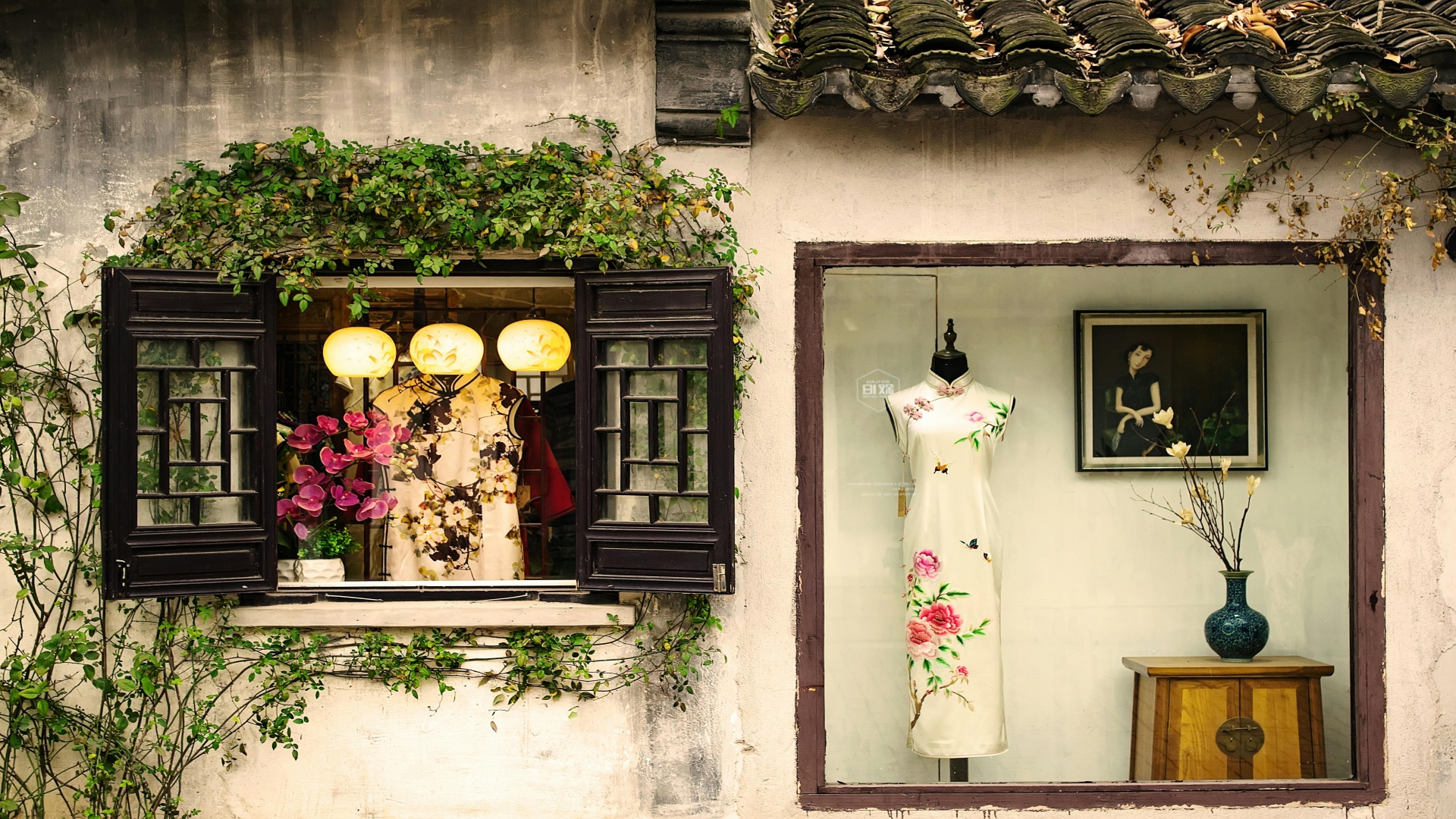
Absolutely. Your silk embroidery master will only teach you technique — no sales counter. The tea farmer on Longjing Village will brew tea for you, but again, there is no pressure to purchase. For genuine independent shopping: Pingjiang Road (Suzhou, Day 5) is lined with artisan-owned shops dealing in embroidery, fans, and tea ware; Nanjing Road (Shanghai, Days 10–11) has everything from premium silk scarves to Shanghai-inspired souvenirs; and Tianzifang (Day 11) offers artisan ceramics, jewelry, and textiles. Your guide can point you toward specific shops if you ask, but there are no shopping commissions or designated partner stores. This policy is fundamental to how we operate.
It is manageable for travelers with moderate fitness, but Jiangnan involves more continuous walking on stone and flagstone surfaces than a museum tour. Suzhou gardens are compact but have uneven stone paths and occasional steps; Wuzhen’s canal streets (Day 3) and Pingjiang Road (Day 5) involve walking on ancient flagstones that can be smooth or uneven. Anji’s bamboo forest boardwalks (Day 7) are well-maintained, mostly flat, and suitable for all ages. There is no trekking, climbing, or prolonged standing. However, wheelchair users and travelers with mobility aids should contact us before booking — some classical gardens have limited barrier-free access, and we will tailor the route accordingly.
Nanjing Lukou International Airport (NKG) operates direct international flights to several Asian gateway cities and serves as a major domestic hub. For North American travelers, the most practical routing is to fly into Shanghai Pudong (PVG) — served by direct flights from Los Angeles, San Francisco, New York, Seattle, and Vancouver — and take a high-speed train to Nanjing (approximately 1.5 hours). We will meet you at either airport. Both options are smooth and fully supported.
Yes — they are profoundly different, and including both is deliberate. Wuzhen (Day 3) is a meticulously restored scenic zone; its West Scenic Zone is managed as a unified heritage area with curated artisan workshops, regulated boat routes, and dramatic night illumination. Nanxun (Day 7) is the opposite: a living, working water town where people still live in the Ming-era Hundred-Room Pavilion, there are no turnstiles or entrance fees, and the evening quiet is broken only by the creak of wooden doors and the occasional splash of a fish. Wuzhen is elegant and composed. Nanxun is raw, lived-in, and intimate. Guests often tell us that Nanxun, precisely because it is less curated, becomes the more memorable experience.
No experience is required for any workshop. The embroidery master will start with the most basic stitches; the calligraphy session at Shanjian Lake Brush begins with brush-holding and simple horizontal strokes. Both workshops are designed for complete beginners and yield a small, take-home piece — a small embroidered cloth from Suzhou, and a sheet of your own calligraphy from Huzhou. The goal is not mastery. It is a genuine encounter with skills your hands will understand differently after trying them.
Your best assurance for authentic Dragon Well is the working farm in Longjing Village (Day 8), where you watch the farmer roast your leaves in a large iron wok over a wood fire. Even if you do not purchase there, you will have tasted genuine first-hand, giving you a benchmark against which any later purchase can be measured. Shanghai’s Tianzifang and certain specialty tea shops near Yuyuan Garden (Day 11) are also reputable. Your guide can recommend specific shops but receives no commission. As a rule, avoid buying Dragon Well at tourist entrances to West Lake or from street vendors.
March–May and September–November are ideal. April is the goldilocks window: Longjing tea farmers harvest the year’s first and most prized flush (Ming Qian tea), crabapple blossoms and wisteria drape Suzhou’s garden walls, and temperatures hover at a perfect 15–22°C. Late March brings plum and cherry blossoms. September–November delivers crisp autumn skies, Qixia Mountain’s red maple leaves (peak viewing: mid-November to early December), and the lingering fragrance of osmanthus in Hangzhou. Summer (June–August) is hot and humid, though the gardens remain lush. Winter (December–February) is starkly beautiful — snow on a Suzhou garden is exquisitely quiet — but dress accordingly.
None beyond those listed. Meals beyond the welcome and farewell dinners are at your own expense, and we provide a per-meal budget estimate (CNY 150–350 per person) so you can plan accordingly. Alcoholic beverages beyond what is served at included meals are also separate. Tips for guides and drivers are entirely discretionary. There are no mandatory optional excursions or add-on fees.
As of December 1, 2025, Lingyin Feilai Feng Scenic Area (including Lingyin Temple, Yongfu Temple, and Taoguang Temple) is free of charge . However, visitors must make a real-name reservation in advance through the official mini-program on Alipay or WeChat, selecting a morning or afternoon time slot . We will handle this reservation for you — but please confirm your preferred time slot with us at least 72 hours before the visit.