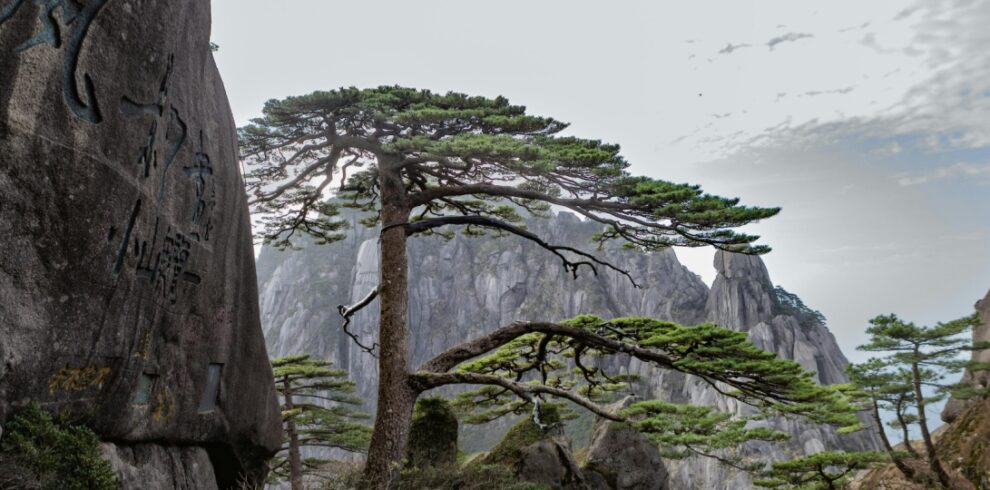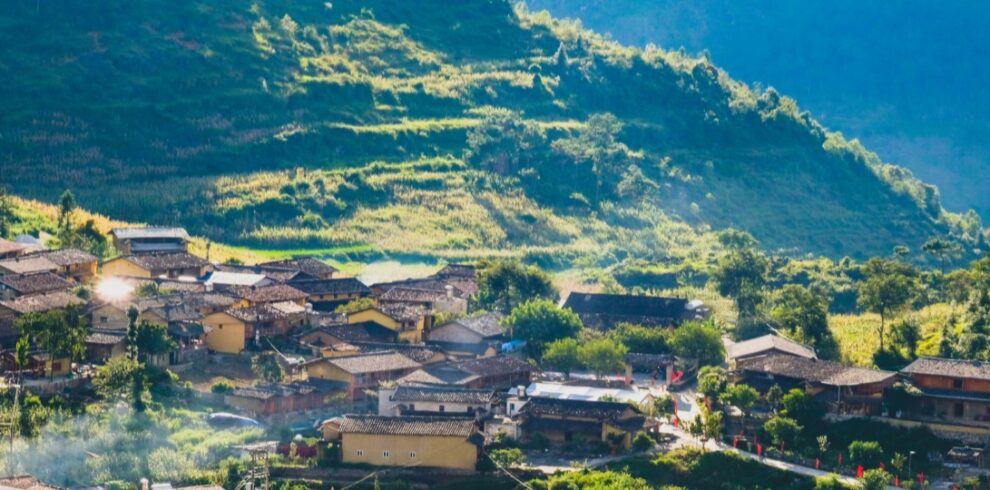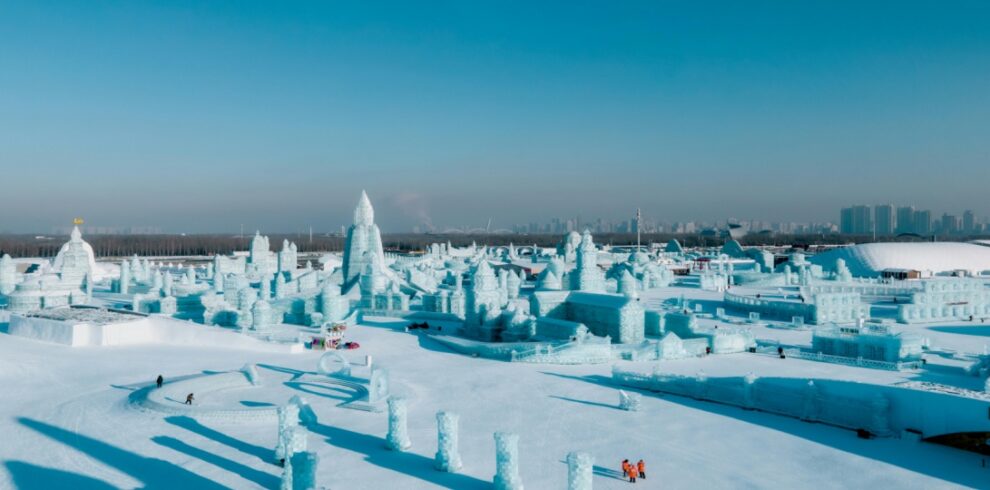
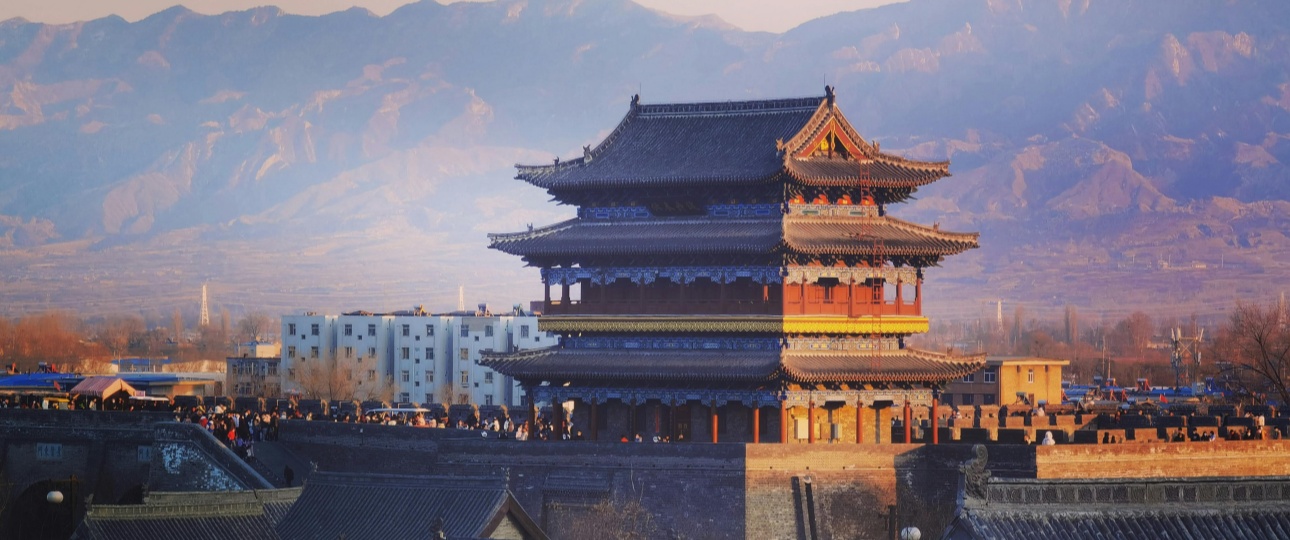
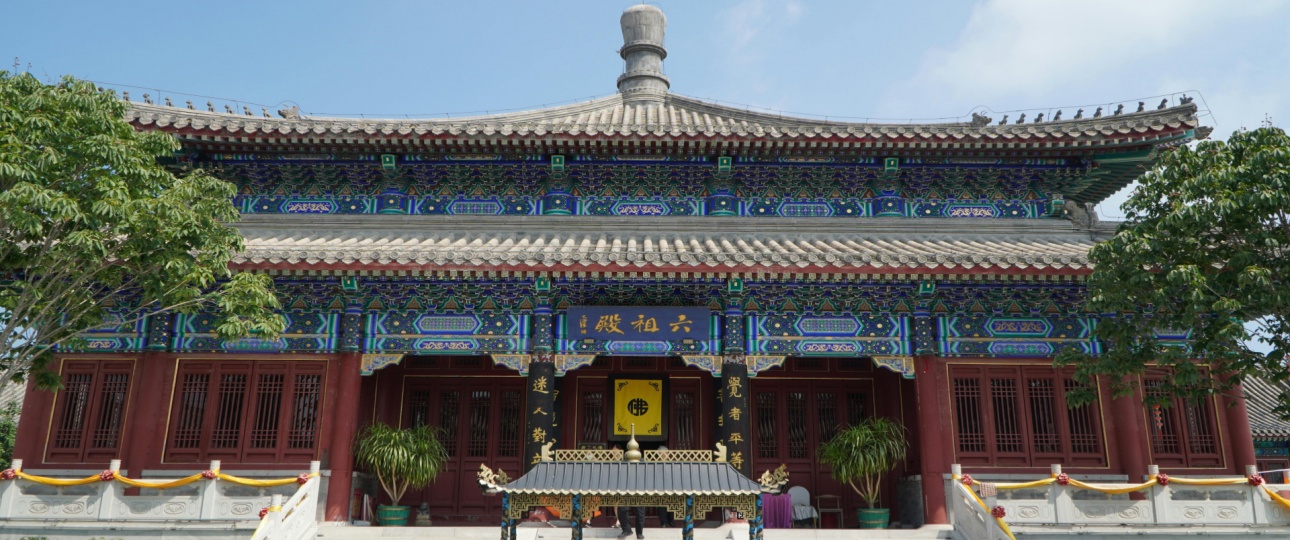
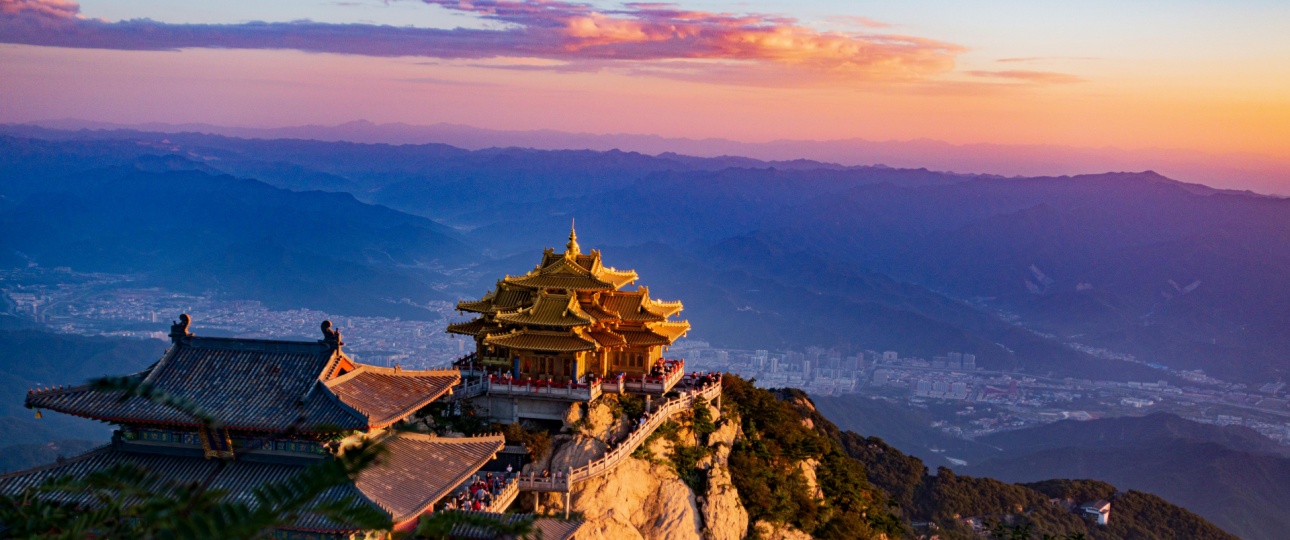
Journey through Shanxi for China’s richest collection of intact ancient timber architecture, featuring Tang temples, the Hanging Temple, Yungang Grottoes and centuries-old courtyard fortresses.
Overview
There is a saying among Chinese architects: “Above ground, look to Shanxi.” While much of the world’s ancient architecture has crumbled into dust, this singular province cradles more than 70% of China’s surviving pre-14th-century timber structures — wooden temples, pagodas, and halls that have stood through dynastic collapses, earthquakes, and wars.
This is not a greatest-hits bus tour. This is a linear journey from north to south along the Datong–Xi’an High-Speed Railway corridor, tracing a route once walked by Liang Sicheng and Lin Huiyin — the architectural historian couple who first revealed these treasures to the modern world in the 1930s. We begin where nomadic cultures collided with settled empires (Datong’s Yungang Grottoes), descend through the Tang Dynasty’s oldest surviving wooden halls (Nanchan and Foguang Temples), pause in a Ming-dynasty walled city frozen in amber (Pingyao), and conclude where Yuan-dynasty frescoes blaze across temple walls in a riot of divine color (Yongle Palace).
This 13-day, 12-night journey is paced for the seasoned traveler who values depth over distance. Mornings are unhurried. Afternoons are dedicated to one, perhaps two, sites — never more. Evenings are yours: a glass of wine in a restored Ming courtyard, a stroll on a 600-year-old city wall at golden hour, or simply the quiet pleasure of a well-earned rest.
No shopping stops. No staged performances. Just wood, stone, pigment, and time.
Trip Highlights
- Walk the sacred axis of Chinese Buddhist art at Yungang Grottoes, where 51,000 statues carved into sandstone cliffs span the 5th century, fusing Indian, Persian, and Chinese aesthetics into something utterly singular
- Stand beneath the oldest timber building in China — Nanchan Temple, dated precisely to 782 CE — and later at Foguang Temple, the largest Tang-dynasty wooden hall ever found, whose towering dougong brackets Liang Sicheng called “heroic”
- Sleep within living history — three nights in a converted Ming-dynasty general’s residence inside Pingyao’s intact city walls, where the cobblestones remember the clink of silver taels
- Assemble a Song-dynasty dougong bracket with your own hands in a private workshop guided by a master carpenter, decoding the joinery that makes China’s timber structures earthquake-proof without a single nail
- Trace pigment to prayer at Yongle Palace, where Yuan-dynasty muralists covered 1,000 square meters of wall with a Taoist pantheon so vivid it has been called “the Sistine Chapel of the East”
- Savor Shanxi’s noodle culture — from knife-cut daoxiaomian in Datong to a private dough-sculpting session with a local miansu artisan
- Cross the centuries by high-speed rail — all intercity transfers are by modern (D- or G-class trains), with business-class upgrade options and car support for last-mile temple access
Itinerary
Days 1–3 · Datong — The Frontier of Faith
Arrive in Datong, where nomadic empires met the Middle Kingdom. Settle into comfort before exploring the 5th-century sandstone sutras of Yungang Grottoes, the Liao-dynasty timber halls of Huayan Monastery, and the astonishing 67-meter Yingxian Wooden Pagoda — the world's oldest standing timber tower, built in 1056 CE without a single nail.Days 4–6 · Taiyuan — The Scholar's Pivot
A swift high-speed rail transfer south to the provincial capital. Walk the Song-dynasty halls of Jin Ci, where carved wooden dragons coil around millennia-old pillars. Then journey into the Wutai foothills for the pilgrimage every architect dreams of: Nanchan Temple (782 CE) and Foguang Temple (857 CE) — the two oldest surviving Tang-dynasty timber structures on earth.
Days 4–6 · Taiyuan — The Scholar's Pivot
A swift high-speed rail transfer south to the provincial capital. Walk the Song-dynasty halls of Jin Ci, where carved wooden dragons coil around millennia-old pillars. Then journey into the Wutai foothills for the pilgrimage every architect dreams of: Nanchan Temple (782 CE) and Foguang Temple (857 CE) — the two oldest surviving Tang-dynasty timber structures on earth.
Days 7–9 · Pingyao — The Living Museum
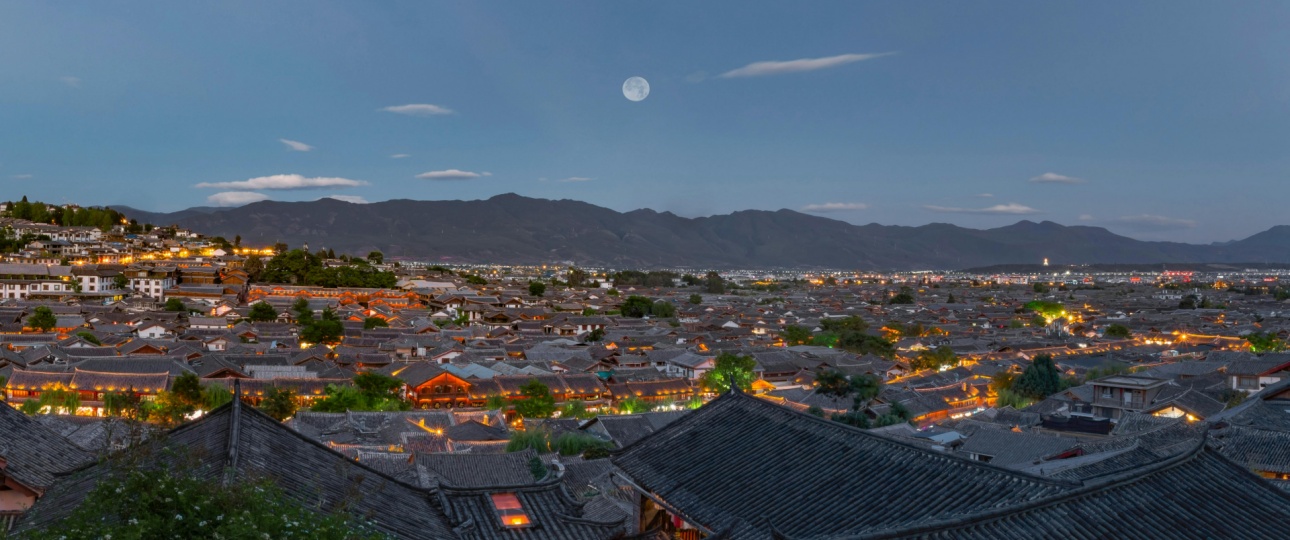
Enter a Ming-dynasty walled city where 4,000 courtyard houses still stand within unbreached ramparts. Sleep in a restored general's mansion. Assemble dougong brackets with a master carpenter. Knead dough into blossoms in a noodle-art workshop. At dusk, climb the city wall for a panorama of grey-tiled roofs stretching to the horizon.
Days 10–13 · Yuncheng — The Southern Sanctum
Follow the high-speed rail to Shanxi's southern edge, where salt lakes shimmer like a dead sea. Stand before the 700-year-old Taoist frescoes of Yongle Palace — China's "Sistine Chapel of the East" — and pay homage at the world's largest Guandi Temple. A farewell feast closes the journey before your departure transfer.
Your journey begins the moment you clear customs. A private chauffeur will be waiting at Datong Yungang International Airport (DAT), holding a name sign. No navigating unfamiliar transit systems, no haggling with taxi drivers — just a smooth 30-minute transfer to your hotel.
Settle into your room at the Yungang Jianguo Hotel (or the newer Datong Yungang Hotel in the Yu-dong CBD), both five-star properties with generous breakfast buffets that blend Western comforts with Shanxi specialties. The rest of the day is intentionally blank. Shower, nap, or take a gentle stroll in the nearby Datong Old City Wall precinct if energy permits. A light welcome dinner at the hotel restaurant introduces you to the gentle flavors of northern Shanxi — think lamb noodle soup and paper-thin shaomai.
Accommodation: Yungang Jianguo Hotel or Datong Yungang Hotel.
Morning. After a leisurely breakfast, a 30-minute drive delivers you to Yungang Grottoes, a UNESCO World Heritage site carved between 460–525 CE under the Northern Wei Dynasty. Your English-speaking guide leads you through the 45 major caves in a carefully curated sequence: the colossal seated Buddha of Cave 20 (the “open-air Buddha,” whose missing front wall reveals a 13.7-meter figure), the polychrome splendor of Cave 6 with its pagoda pillar narrating the Buddha’s life, and the famous “Music Cave” (Cave 12) where celestial musicians play pipa, konghou, and panpipes frozen in sandstone.
Afternoon. Lunch at a local restaurant featuring Datong’s ten iconic dishes — lamb offal soup, pork-ribbon daoxiaomian, and buckwheat youdun rolls. Then, a visit to Huayan Monastery in the old city center, whose upper temple hall houses five Ming-dynasty Buddhas and a Qing-dynasty sutra cabinet carved like a miniature celestial palace. The lower temple’s Bhagavan Sutra Hall, dating to 1038 CE, is a quiet masterpiece of Liao-dynasty timber engineering.
Evening. Return to the hotel. Optional: a twilight walk along the restored Datong city wall, illuminated against the desert-edge sky.
Accommodation: Yungang Jianguo Hotel or Datong Yungang Hotel
Morning. A comfortable 90-minute drive south takes us across the Sanggan River basin to Ying County, home to the Yingxian Wooden Pagoda (Sakyamuni Pagoda of Fogong Temple). Built in 1056 CE — nearly a millennium ago — this octagonal, five-story structure rises 67.31 meters without a single iron nail. It is the world’s tallest and oldest surviving timber pagoda. Your guide explains the ming–an (visible-invisible) floor system, the 54 types of bracket clusters that give the tower its resilience against 40+ recorded earthquakes, and why current conservation policy prohibits visitors from climbing above the ground floor.
Afternoon. Return to Datong. En route, a brief stop at the Shanhua Monastery — often overlooked by tour groups, its Mahavira Hall (11th century) contains five central Buddhas and astonishingly refined Liao-dynasty bracket sets. The rest of the afternoon is free. For those with energy to spare, the Datong Museum (free entry, designed by MAD Architects) offers an elegantly curated overview of the region’s multi-ethnic history — Xianbei, Khitan, Jurchen, Mongol, and Han.
Accommodation: Yungang Jianguo Hotel or Datong Yungang Hotel
Morning. A relaxed breakfast, then check-out. Transfer to Datong South Railway Station (3.8 km from the Yungang Hotel, approximately 10 minutes). Board a D- or G-class high-speed train on the newly integrated Datong–Xi’an corridor, which has been fully operational since late 2024 and saw 24 additional services added in July 2025. The journey south traces the Fen River valley, with views of loess ridges and terraced farmland.
Afternoon. Arrive at Taiyuan South Station. Transfer to the Kempinski Hotel Taiyuan, the city’s first international five-star luxury property, located in the central commercial district and offering a seamless blend of European elegance and Shanxi hospitality. After a light lunch, visit the Shanxi Museum — province-level collections of bronze ritual vessels, Northern Dynasty ceramics, and architectural models that provide essential context for the journey ahead. The museum is a manageable size: two to three hours cover the highlights without exhaustion.
Accommodation: Kempinski Hotel Taiyuan .
Morning. A 40-minute drive southeast of the city brings us to Jin Ci (Jin Memorial Temple) — a sprawling temple complex whose central hall, the Hall of the Holy Mother (Shengmu Dian), was built between 1023–1032 CE and is considered one of the finest surviving examples of Song-dynasty timber architecture. The hall’s eight twisted-wood dragons coiled around its front pillars are unique in all of China. Don’t miss the Nanlao Spring and the cypress trees planted during the Zhou Dynasty — living witnesses to 3,000 years of continuous veneration.
Afternoon. Lunch at a local restaurant. Then return to the hotel for a rest during the warmest hours. Late afternoon, an optional visit to Shuangta Si (Twin Pagoda Temple) or a gentle walk through Taiyuan’s Liuxiang old street quarter.
Accommodation: Kempinski Hotel Taiyuan
Morning. This is the day the itinerary earns its raison d’être. We depart early for the Wutai Mountains foothills region (approximately 2.5 hours by private vehicle) to visit two temples that changed architectural history.
Nanchan Temple, dated precisely to 782 CE by an inscription on its main beam, is the oldest surviving timber building in China — a modest, three-bay hall whose unadorned elegance belies its momentous significance. The temple sits quietly in a rural village, without commercial stalls or crowds. Inside, Tang-dynasty sculptures retain traces of their original polychromy.
A short drive away, Foguang Temple (Foguang Si) rises from a pine-dotted slope. This is the temple that stopped Liang Sicheng in his tracks in 1937, when he realized it was far older and grander than anything he had seen in Beijing or Kyoto. The East Hall, built in 857 CE, is Tang architecture at its apex: massive dougong brackets cantilever the roof’s weight outward, creating the deep eaves and soaring interior space that Tang poets celebrated. The hall contains 35 colored sculptures, Tang-dynasty murals, and inscriptions — a rare “quadruple crown” of art, architecture, sculpture, and epigraphy.
Lunch. Simple farmhouse fare in Dou Village, featuring local mushrooms and wild greens.
Afternoon. Drive to Xinzhou Ancient City (approximately 1 hour) for a brief stroll through the restored Ming-Qing streets. Then onward to Taiyuan (approximately 1.5 hours). Evening at leisure.
Accommodation: Kempinski Hotel Taiyuan.
Morning. A short, relaxed journey: we board the high-speed train at Taiyuan South and arrive at Pingyao Old City Station in under an hour. Transfer into the walled city by electric cart — combustion engines are restricted within the walls.
Your home for the next three nights: Huazhushe · Pingyuan Gongfu , a five-diamond-rated boutique courtyard residence originally built as the mansion of Ming-dynasty General Huo Tao. Its 21 guest rooms blend Ming-Qing architectural features — carved wood panels, courtyard latticework, and in some rooms, restored yaodong (cave-dwelling) structures — with modern five-star comforts. The inn is a two-minute walk from the city wall and Rishengchang Draft Bank.
Afternoon. A gentle orientation walk through Pingyao’s main south-north axis. Unlike many “ancient towns,” Pingyao is genuinely intact: 4,000 Ming–Qing courtyard houses, six city gates, and 72 watchtowers within walls that have never been breached. The afternoon’s visit focuses on Rishengchang Draft Bank, the “father of Chinese banking,” whose remote branch network once spanned half of Asia.
Evening. Dinner at a courtyard restaurant within the walls. Try Pingyao wantuo (buckwheat starch noodles) and pingyao niurou (spiced beef).
Accommodation: Huazhushe · Pingyuan Gongfu or similar
Morning. This is a hands-on day. Pingyuan Gongfu and partner cultural studios offer immersive cultural workshops tailored to English-speaking guests. Options include:
- Dougong Bracket Assembly Workshop: A master carpenter introduces the “grammar” of Chinese timber joinery — the sunmao (mortise-and-tenon) system — and guides you through assembling a scaled-down Song-dynasty bracket set. You will understand, in your fingertips, why Chinese buildings ride earthquakes like rafts on swelling seas.
- Shanxi Noodle Art Experience: A local miansu (dough-sculpting) artisan teaches the basics of transforming wheat dough into intricate flowers, animals, and figures — an intangible cultural heritage tradition particularly vibrant in Jinzhong.
- Paper-Cutting Workshop: Using templates and freehand techniques, create traditional Shanxi paper-cuts with symbolic motifs.
Afternoon. Free time to explore Pingyao at your own pace. Climb the city wall for a sunset panorama of grey-tiled roofs stretching to the horizon. Visit the Confucian Temple (Wen Miao) or the County Government Office (Xian Ya). The beauty of Pingyao is that it rewards wandering — every alley reveals a detail: a stone lion rubbed smooth by centuries of hands, a carved doorway lintel, a courtyard glimpsed through a half-open gate.
Accommodation: Huazhushe · Pingyuan Gongfu
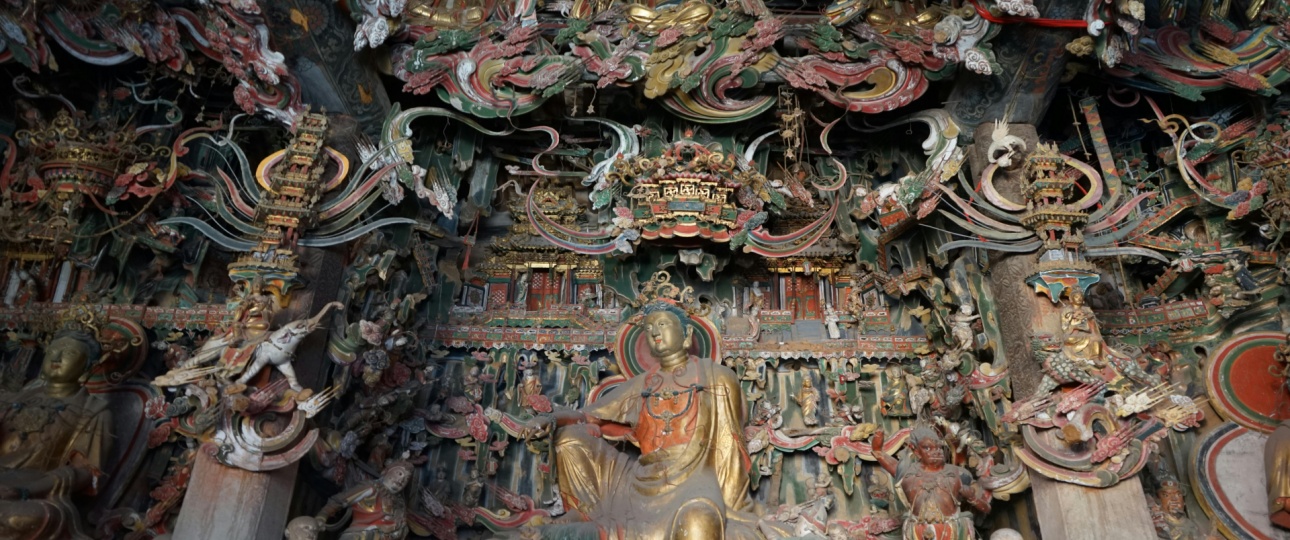
Morning. A short drive southwest of the city walls leads to Shuanglin Temple (Shuanglin Si) — a modest complex whose interior is anything but. Over 2,000 painted clay sculptures from the Song, Yuan, Ming, and Qing dynasties fill the halls. The standout is the Hall of a Thousand Buddhas, where hanging sculptures of bodhisattvas on spiraling clouds create a 360-degree celestial tableau. Photographs cannot capture the dimensionality of this space.
Afternoon. North of Pingyao lies Zhenguo Temple (Zhenguo Si), whose Ten-Thousand-Buddha Hall, dated to 963 CE (Northern Han Kingdom), is one of only three surviving timber structures from the Five Dynasties period. Its bracket arms extend outward like wings — a transitional form between Tang boldness and Song refinement.
Return to Pingyao by late afternoon. This evening, we have arranged a special experience: a private after-hours visit to the Xietongqing Bank vault as part of the Youjian Piaohao nighttime program — a quiet, atmospheric way to understand the city’s financial soul without daytime crowds.
Accommodation: Huazhushe · Pingyuan Gongfu
Morning. A relaxed breakfast in the courtyard. Pack, then transfer to Pingyao Old City Station for the high-speed train south to Yuncheng, the southernmost city in our journey. The route passes through the Zhongtiao Mountains and the salt lakes that have made Yuncheng a strategic resource since antiquity.
Afternoon. Check in at Novotel Yuncheng a Sino-French managed high-end hotel near Yuncheng Yanhu International Airport and the Salt Lake scenic area. The Novotel brand offers familiar international-standard comforts — a welcome respite after several days of immersive heritage accommodation.
Late afternoon, a visit to the Yuncheng Salt Lake, often called “China’s Dead Sea.” The lake’s colors shift with the light, and a gentle walk along the boardwalk offers a completely different landscape register from the temple interiors of the past week.
Accommodation: Novotel Yuncheng.
Morning. We drive south to Ruicheng County (approximately 1.5 hours) to visit Yongle Palace (Yongle Gong), the apotheosis of Yuan-dynasty temple art. Built to honor Lü Dongbin, one of the Eight Immortals of Taoism, the palace was relocated stone-by-stone in the 1950s to escape reservoir flooding — an engineering feat as remarkable as the frescoes it preserved.
The Hall of the Three Purities contains the masterwork: Chaoyuan Tu (Charts of the Heavenly Court), a 4.26-meter-high by 94.68-meter-long mural depicting 290 deities in procession — flowing robes, billowing clouds, and a continuous compositional line that scholars have compared to the scroll paintings of Wu Daozi. This is the largest single Taoist mural in China, and its condition — vivid mineral pigments on earthen plaster — is astonishing for its 700-year age.
Afternoon. Lunch in Ruicheng. Return to Yuncheng by late afternoon. Optional: visit the Yuncheng Museum, which contextualizes the Hedong region’s deep history as the cradle of Chinese civilization.
Accommodation: Novotel Yuncheng
Morning. A visit to Jiezhou Guandi Temple — the ancestral temple of Guan Yu, the deified general whose cult spans Chinese folk religion, Taoism, and Buddhism. The complex, built like a miniature imperial palace, is the largest Guandi temple in China and features magnificent Ming-Qing timber halls, carved stone paifang gateways, and dragon-etched pillars that rival those of the Forbidden City.
Afternoon. Free time for last-day shopping and exploration at Yuncheng’s local markets. Recommended: the Yuncheng specialty shops near the Salt Lake scenic area, where you can find Hedong salt products, Guan Gong-themed crafts, and local snacks as souvenirs. No forced shopping stops — your guide is available to assist with recommendations or leave you to explore independently.
Evening. A farewell dinner at a carefully selected local restaurant, featuring southern Shanxi specialties: wenxi huamo (decorative dough flowers), yangcheng shaogan (herb-roasted pork liver), and hand-pulled tijian noodles.
Accommodation: Novotel Yuncheng
Morning at leisure. Enjoy a final breakfast at the hotel. Depending on your flight schedule, you have time to pack, take a last walk, or simply rest before the journey ahead.
Transfer to the airport. A private car will take you to Yuncheng Yanhu International Airport (YCU) for your domestic flight to a major international hub (Beijing, Shanghai, or Guangzhou), where you connect to your trans-Pacific flight home. Alternatively, you may return to Taiyuan via high-speed rail (approximately 2.5 hours) and depart from Taiyuan Wusu International Airport (TYN).
Includes/Excludes
Cost Includes
- 12 nights’ accommodation in international five-star or equivalent hotels, and heritage boutique courtyard residences inside Pingyao Ancient City
- Daily breakfast (Day 2–Day 13) — full Western and Chinese buffet or à la carte options at each hotel
- Welcome dinner (Day 1) and farewell dinner (Day 12)
- Private English-speaking cultural guide throughout the journey (certified, with specialized training in Chinese architectural history)
- All intercity high-speed rail tickets (Datong → Taiyuan, Taiyuan → Pingyao, Pingyao → Yuncheng), second class; business-class upgrade available on request
- All land transfers in private, air-conditioned vehicles, including:
- Airport arrival pickup (Datong Yungang International Airport)
- Train station transfers at each city
- Daily excursion transportation
- Airport departure transfer (Yuncheng Yanhu International Airport or Taiyuan Wusu International Airport)
- All entrance fees to listed scenic areas and cultural sites
- Two hands-on cultural workshops: Dougong bracket assembly and Shanxi noodle art (Day 8)
- Private after-hours visit to Xietongqing Bank vault (Day 9)
- 24/7 on-call support from our local operations team
- Complimentary bottled water and Wi-Fi in all vehicles
Cost Excludes
- International airfare to and from China / North America
- Chinese visa fees (note: citizens of the United States, Canada, and 52 other countries may be eligible for the 240-hour visa-free transit policy if entering via eligible ports; see FAQ)
- Domestic airfare between Yuncheng/Taiyuan and international hub cities (e.g., Beijing, Shanghai) on Day 13 — we are pleased to assist with booking
- Travel insurance (strongly recommended; we can recommend providers)
- Lunches and most dinners (except where specified) — budget approximately CNY 100–250 per meal per person; your guide can recommend restaurants at every stop
- Personal expenses — laundry, mini-bar, telephone charges, alcoholic beverages beyond what is served at included meals
- Tips for guides and drivers — discretionary; customary guidelines will be provided in your pre-departure packet
FAQs
Most likely, yes — but the situation has become significantly more convenient. As of January 2025, China has expanded its visa-free transit policy to 240 hours (10 days) and added Shanxi Province to the eligible regions, specifically allowing travel within Taiyuan and Datong. However, since this itinerary is 13 days (exceeding 10 days), participants will require a standard tourist visa (L visa). We provide a detailed invitation letter and itinerary for your visa application. U.S. and Canadian citizens should apply at the nearest Chinese consulate at least one month before departure.
Moderate but manageable for travelers in reasonable health. Most temple visits involve walking on flat stone or earth surfaces, with occasional stairs. The most demanding day is Day 6 (Nanchan & Foguang Temples), which involves approximately 2.5 hours of driving each way and walking on uneven temple grounds. There is no trekking, climbing, or prolonged standing. Travelers are always welcome to sit out any portion of the day’s program.
All intercity transfers are by high-speed rail, with the longest segment being approximately 2.5 hours (Datong → Taiyuan). Daily excursion drives are typically 30–90 minutes each way. We deliberately avoid long road transfers — this is a key design principle of the itinerary.
Absolutely. Shanxi cuisine incorporates lamb, wheat noodles, buckwheat, millet, potatoes, and a wide range of vegetables. Vegetarian, gluten-free, and halal options can be arranged with advance notice. Please inform us of any allergies or dietary requirements at the time of booking.
April–May and September–October are ideal. Spring brings mild temperatures (15–25°C / 59–77°F) and flowering sophora trees; autumn delivers crisp skies and golden foliage against grey-tiled architecture. Summer (June–August) can be hot in the Fen River valley, though the mountain temples (Day 6) remain cool. Winter (November–March) is cold but dramatically beautiful, with snow on temple roofs and virtually no other visitors — the Tang halls of Foguang Temple under snow are a sight few Western travelers have ever witnessed.
Yes. This is a guided private tour, not a regimented group departure. If you wish to linger at a particular site, skip a listed activity, or explore independently for an afternoon, your guide will happily accommodate. The itinerary provides a rich structural framework — how you inhabit it is your choice.
Your dedicated guide speaks fluent English and is certified by the China National Tourism Administration. In addition, we provide a pre-departure digital handbook with key architectural terms in Chinese and English, a glossary of Buddhist iconography, and a timeline of Chinese dynasties for reference.
It can be adapted. A 10-day condensed version (skipping Yuncheng, ending in Pingyao) is available, though we strongly recommend the full 13-day route for the narrative arc from grottoes through timber halls to frescoes.
Day 1 is intentionally left unstructured after hotel check-in. There are no scheduled activities. A light welcome dinner is provided at the hotel restaurant, so you need not venture far. Your guide will be available by phone and can offer gentle walking suggestions for those who wish to stretch their legs, but the priority is rest and recovery from the transpacific flight.