12 Days Through Xiamen & Quanzhou
Overview
From Colonial Islands to the World’s Greatest Port: A Slow Pilgrimage Through Fujian’s Living World Heritage.
There are cities that preserved history in glass cases. Quanzhou is not one of them.
For over four centuries, this was the largest and most cosmopolitan port on earth — the starting point of the Maritime Silk Road, the city Marco Polo called “Zayton” and described as one of the busiest harbors in the world. Ships from Persia, India, and Arabia anchored here. Mosques, Hindu temples, and Nestorian churches rose alongside Buddhist pagodas. Merchants spoke a dozen languages in the bazaars. And when the tides of trade shifted, Quanzhou did not reinvent itself — it simply fell quiet, its stone bridges, carved temples, and ancient shipwrecks left intact, waiting.
Today, Quanzhou is a UNESCO World Heritage site — not for a single monument, but for an entire urban fabric that tells the story of peaceful coexistence. Twenty-two heritage points are scattered across the city and its hinterland: China’s oldest surviving mosque, a temple housing relics of the prophet Muhammad’s disciples, a bridge built with granite blocks weighing up to ten tons, and cliffside inscriptions praying for favorable winds on voyages to distant lands.
This 12-day journey begins in Xiamen, the graceful island city of colonial villas and piano music, before vaulting westward to the Fujian Tulou — earthen fortresses of the Hakka people, UNESCO-listed and otherworldly. Then, by high-speed rail, we enter Quanzhou for eight unhurried days: walking the thousand-year-old stone bridges, tasting Tieguanyin tea at its source in Anxi, hearing the ancient strings of Nanyin music, and watching puppeteers animate wooden figures with invisible threads.
There are no rushed bus transfers, no staged performances, and no shopping stops. Just a slow, immersive pilgrimage into the maritime heart of China — where every stone bridge, every carved deity, every cup of oolong tea holds a story of the sea.
Trip Highlights
- Walk the car-free island of Gulangyu — a UNESCO World Heritage site of colonial villas, piano museums, and subtropical gardens, reached by private ferry across Xiamen Bay
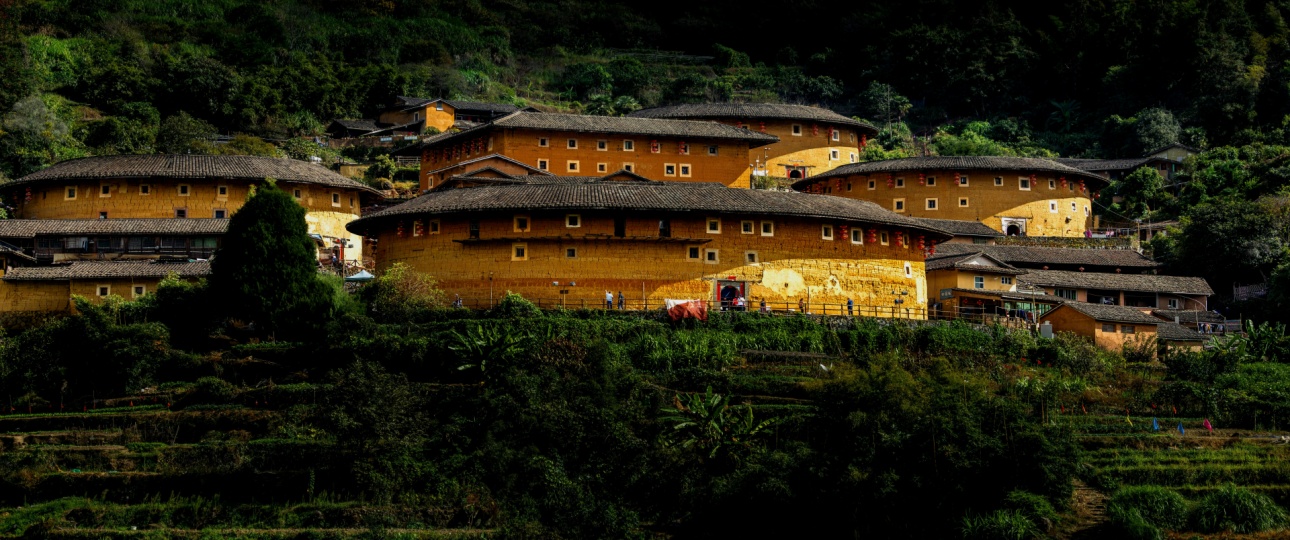
- Enter the earthen fortresses of the Hakka people at the Tianluokeng Tulou Cluster — five concentric circular and square buildings nicknamed "Four Dishes and One Soup," a UNESCO wonder of communal architecture
- Trace the world's longest ancient stone bridge — Anping Bridge, stretching 2.25 kilometers across the bay on granite slabs, built in the 12th century without modern machinery
- Stand in China's oldest surviving mosque — Qingjing Mosque, founded in 1009 CE by Arab merchants, its domed prayer hall still bearing Kufic inscriptions from the Quran
- Sip Tieguanyin oolong at its source — a private tea ceremony in Anxi's terraced tea gardens, where this legendary orchid-scented tea has been cultivated for over 300 years
- Explore a city where nine religions coexisted — from the Kaiyuan Temple (Buddhist, 686 CE) and its twin pagodas to the thatched Manichaean temple of Cao'an, the last surviving relic of a once-global faith
- Hear Nanyin, the oldest surviving form of Chinese music, and watch marionette masters animate puppets with invisible threads — two UNESCO Intangible Cultural Heritage traditions performed live
- Admire the red-brick elegance of southern Fujian at dusk in Wudianshi, a restored cluster of Ming-Qing courtyard mansions whose carved swallowtail roofs glow under lantern light
- All intercity transfers by private vehicle and high-speed rail — Xiamen, Nanjing Tulou, Anxi, and Quanzhou connected in a seamless linear arc, with daily driving strictly minimized
- No early wake-up calls — all departures are after 9:00 AM, allowing for a leisurely breakfast and relaxed pace throughout the journey
Itinerary
Xiamen (2 nights) → Nanjing Tulou → Quanzhou (8 nights) → Depart from Quanzhou
Days 1–2 · Xiamen — Colonial Island & Piano Shores
Touch down at Xiamen Gaoqi International Airport, where a private driver awaits. A restful first day eases jet lag with a gentle evening stroll through Xiamen's waterfront. On Day 2, board a private ferry to Gulangyu Island, a car-free UNESCO World Heritage site of colonial villas, piano museums, and subtropical gardens.
Day 3 · Nanjing Tulou — Earthen Fortresses of the Hakka
Journey inland by private vehicle to the Tianluokeng Tulou Cluster — five circular and square earthen buildings nicknamed "Four Dishes and One Soup." After exploring these UNESCO-listed communal fortresses and sharing tea with a Hakka family, continue to Nanjing Station for a swift high-speed train to Quanzhou. Check into your hotel, your base for the next eight nights.
Days 4–11 · Quanzhou — The Maritime Silk Road Capital
Eight unhurried days in the world's greatest medieval port. Walk across thousand-year-old stone bridges. Stand in China's oldest mosque and the world's last Manichaean temple. Hear Nanyin music and watch puppet theater. Visit Tieguanyin tea gardens in Anxi. Explore cliffside inscriptions praying for favorable winds. On your final full day, enjoy free time for shopping along Zhongshan Road and a farewell dinner.
Day 12 · Departure from Quanzhou
A final morning at leisure before a private transfer to Quanzhou Jinjiang International Airport, with direct international flights to Kuala Lumpur, Manila, Bangkok, and Singapore.
Your private chauffeur will be waiting at Xiamen Gaoqi International Airport holding a name sign. Transfer to your hotel takes approximately 20–30 minutes. No activities are scheduled today. After a transpacific flight, rest and recovery are paramount. A gentle welcome dinner featuring Minnan cuisine — oyster omelette, braised seafood, and Xiamen-style popiah — is available at the hotel.
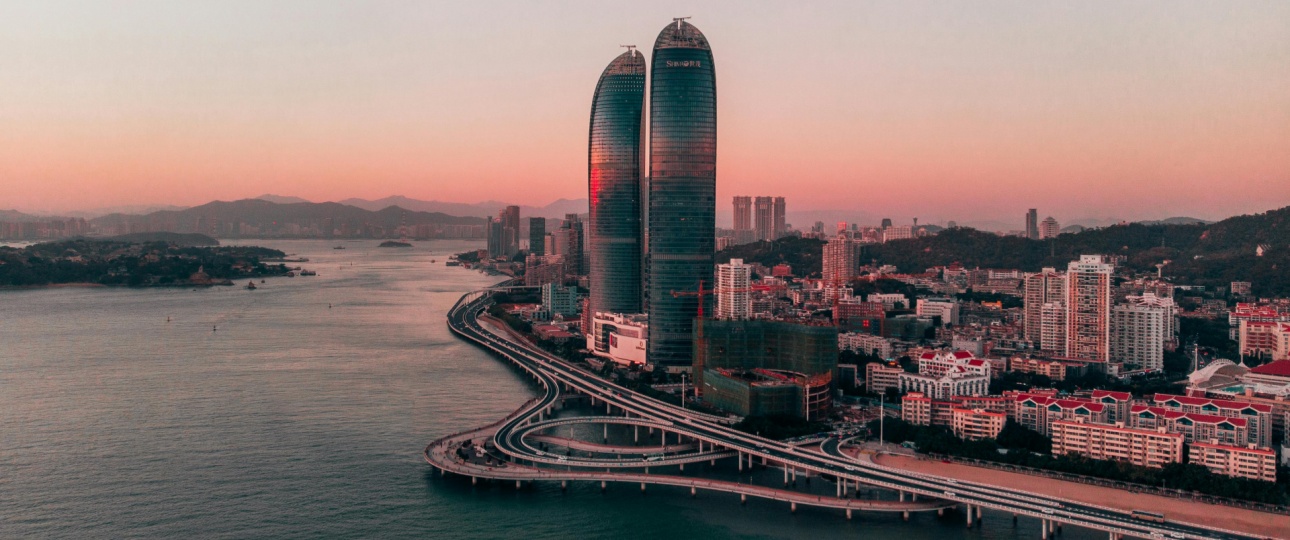
Accommodation: Waldorf Astoria Xiamen (rated 9.5/10 on Ctrip, Michelin-starred Chinese restaurant, 2025 Gold List Best Design Hotel)
Meals Included: Welcome Dinner
After a leisurely breakfast, a private ferry takes you to Gulangyu Island — a UNESCO World Heritage site, car-free since its inception. Known as "Piano Island" for its extraordinary density of pianos per capita, Gulangyu preserves a unique architectural tapestry of colonial villas, consulates, and churches built by the thirteen nations that once maintained settlements here.
Visit the Piano Museum, which houses over 100 rare antique pianos collected by a Chinese-Australian philanthropist. Walk the island's winding lanes, past bougainvillea-draped walls and Art Deco mansions. The highest point, Sunlight Rock, offers a panoramic view of Xiamen's skyline across the bay.
Return to Xiamen by ferry in the late afternoon. The evening is free.
Accommodation: Waldorf Astoria Xiamen
Meals Included: Breakfast
Morning private transfer to the Nanjing Tulou Cluster — a UNESCO World Heritage site approximately 2 hours inland from Xiamen. Here, the Hakka people built immense earthen fortresses, circular and square, housing entire clans behind thick rammed-earth walls. The Tianluokeng Cluster, nicknamed "Four Dishes and One Soup" for its arrangement of four circular buildings around one square central hall, is the most photogenic of all Fujian's tulou.
Walk inside the courtyards and, if invited, share a cup of tea with a Hakka family whose ancestors built these walls centuries ago.
In the late afternoon, transfer to Nanjing Station (approximately 1 hour from Tianluokeng) for the high-speed train to Quanzhou Station (G5076, approximately 39 minutes). Upon arrival, a private vehicle transfers you to your hotel — your base for the next eight nights.
Accommodation: Quanzhou Fengze Marriott Fairfield Hotel (Marriott group, rated 9.1/10, opened 2025)
Meals Included: Breakfast
A day exploring Quanzhou's Jinjiang district. Morning visit to Cao'an Manichaean Temple, the last surviving Manichaean temple in the world — a small thatched shrine built into a hillside, housing a stone statue of Mani, the prophet of a faith that once stretched from Persia to the Pacific and is now extinct everywhere but in this quiet corner of Fujian.
Note: A small troop of wild macaques lives around the temple. They are generally harmless but please do not feed them or leave bags unattended.
A 10-minute drive brings you to Anping Bridge — a UNESCO World Heritage site and the longest ancient stone bridge in China. Built between 1138 and 1151 CE, its 2.25 kilometers of granite slabs, some weighing over ten tons, stretch across the bay. Walk its length in the late afternoon light, when the stone glows golden and fishing boats pass beneath the arches.
As dusk falls, visit Wudianshi Traditional Street, a restored cluster of Ming and Qing red-brick courtyard mansions whose carved swallowtail roofs are most beautiful under lantern light. Non-intangible cultural heritage performances, tea houses, and local snack stalls animate the lanes. Return to Quanzhou in the evening.
Accommodation: Quanzhou Fengze Marriott Fairfield Hotel
Meals Included: Breakfast
This is the heart of the journey. A full day on foot through Quanzhou's Old City, where eight centuries of global trade are written in stone.
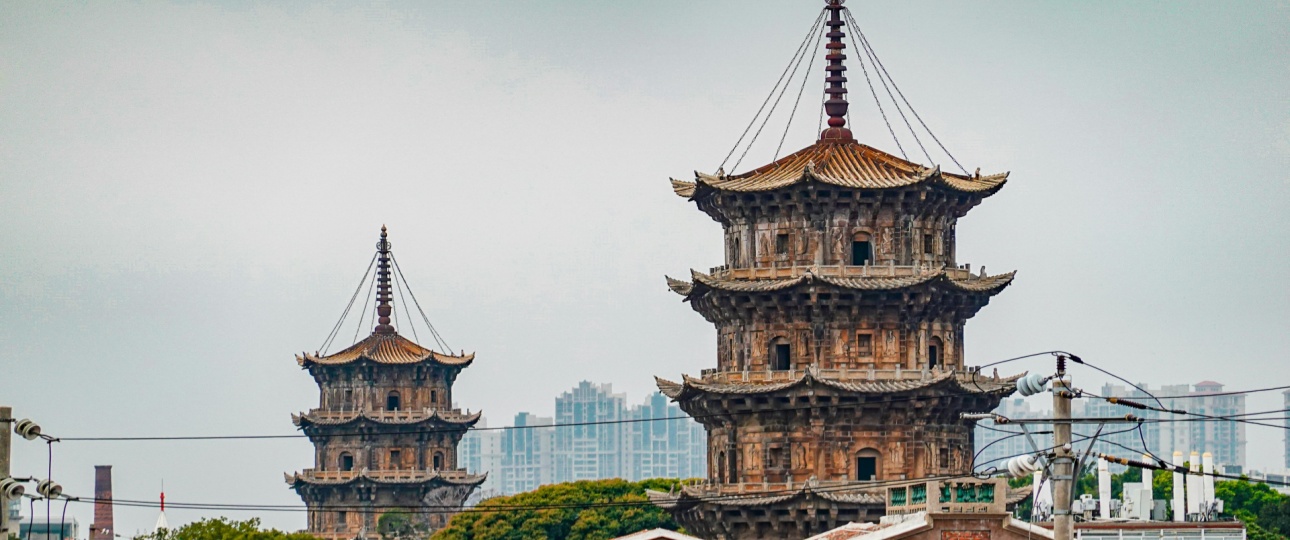
Begin at Kaiyuan Temple, founded in 686 CE, one of China's largest Buddhist temples. Its twin pagodas — the East Pagoda (Zhenguo, 48 meters) and West Pagoda (Renshou, 44 meters) — have dominated Quanzhou's skyline for over a millennium and survived an 8.0-magnitude earthquake in 1604 largely intact. The main hall's carved columns feature Hindu motifs brought by Tamil merchants — a reminder of the port's cosmopolitan past.
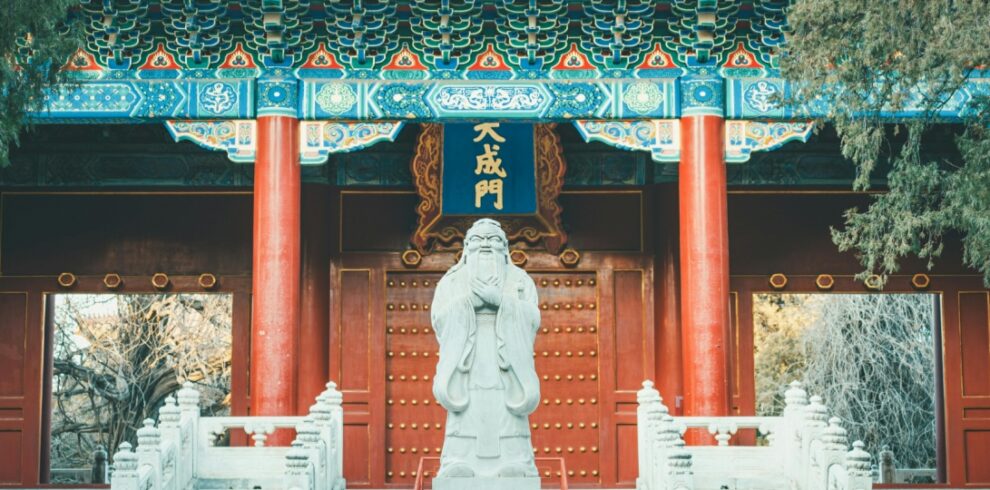
Walk five minutes to Quanzhou Confucian Temple, the largest Confucian temple in southern China, built in the Song Dynasty and expanded over centuries. Its grand ceremonial hall, with its sweeping double-eaved roof, stands as the symbolic center of the city's scholarly tradition.
Continue along West Street, Quanzhou's oldest thoroughfare, lined with traditional snack shops, incense sellers, and century-old bakery stalls. Stop for runbing (spring rolls) and mianxian (fine rice noodles).
Visit Qingjing Mosque, founded in 1009 CE by Arab merchants — the oldest surviving mosque in China. Its domed prayer hall, now roofless, still bears Kufic Arabic inscriptions from the Quran carved into its stone walls.
Two blocks east stands Guanyue Temple, dedicated to Guan Yu, the deified general of the Three Kingdoms era. Its ornate red facade and swirling incense mark it as the most popular temple in the city — where locals still come daily to consult the gods through traditional moon blocks.
A five-minute walk south brings you to Tianhou Temple, dedicated to Mazu, the sea goddess whose cult originated in Fujian and spread across the Maritime Silk Road to Taiwan, Southeast Asia, and beyond. Adjacent lies Dejimen Gate, the southern entrance to the old city wall — where ships once unloaded cargo from distant ports.
Return to the hotel on foot or by vehicle. The entire walk covers approximately 4 kilometers spread over 6–7 hours, with frequent rest stops, a sit-down lunch midway, and the option to return to the hotel by private vehicle at any time.
Accommodation: Quanzhou Fengze Marriott Fairfield Hotel
Meals Included: Breakfast
A gentler day dedicated to understanding Quanzhou's maritime soul. Morning visit to the Quanzhou Maritime Museum, a world-class institution that chronicles the city's rise as the largest port in the medieval world. Its centerpiece is a Song Dynasty wooden ship excavated from Quanzhou Bay — 24 meters long and built with advanced watertight bulkhead technology.
Midday, visit the adjacent Quanzhou Intangible Cultural Heritage Museum, where the living traditions of southern Fujian — puppetry, Nanyin music, ceramic kiln techniques — are on display.
In the afternoon, Quanzhou Museum is just next door (free entry), offering broader historical context on the region's archaeology and folk customs.
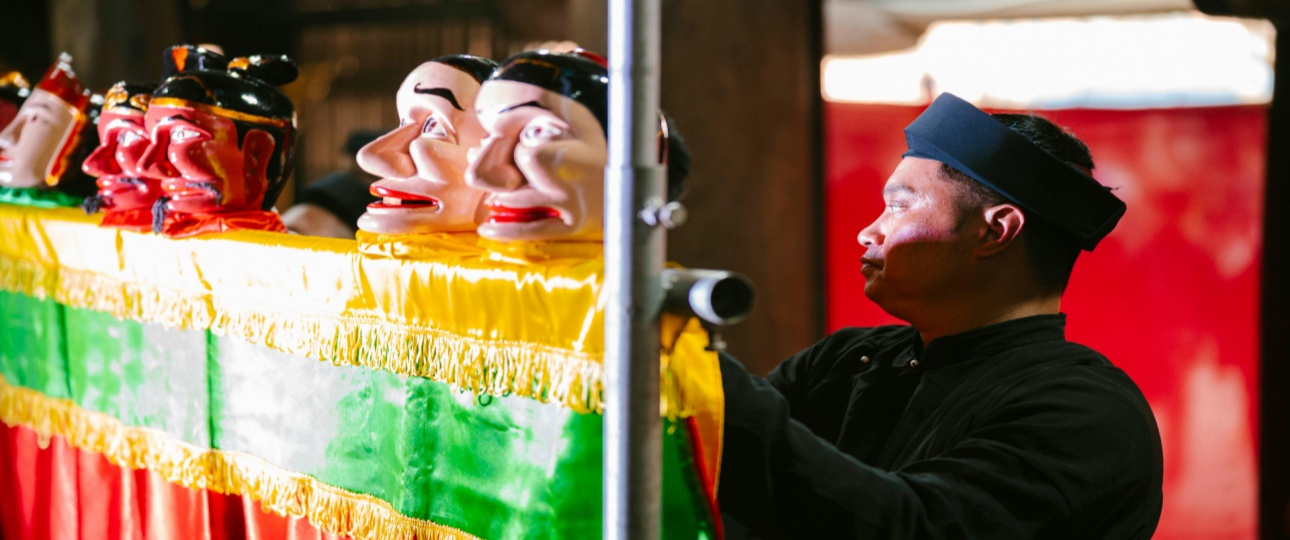
In the evening, experience Nanyin — the oldest surviving form of Chinese music, preserved in southern Fujian for over a thousand years and inscribed by UNESCO on the Representative List of the Intangible Cultural Heritage of Humanity. A private performance in the Old City, followed by a marionette show: wooden figures animated by master puppeteers using up to 36 invisible threads per puppet. Both arts originated in Quanzhou and are still performed by lineage-holding masters.
Accommodation: Quanzhou Fengze Marriott Fairfield Hotel
Meals Included: Breakfast
Morning visit to Xunpu Village, on the banks of the Jin River, where the women of the fishing community still wear the traditional floral headdress known as zanhua wei — fresh flowers woven into elaborate crowns, a custom dating to the Tang Dynasty and inscribed as a national-level intangible cultural heritage. Here, you may participate in the tradition yourself, having flowers pinned into your hair by village women.
Continue to Zhenwu Temple, a Daoist temple dedicated to the Dark Warrior deity, which served as the ceremonial departure point for maritime expeditions — Ming Dynasty admiral Zheng He is said to have prayed here before his voyages.
Nearby, Jiangkou Wharf preserves the stone docks where ships loaded ceramics, silk, and tea bound for ports across the Indian Ocean. The site is quiet now, but the stone mooring posts remain, polished by centuries of ropes.
Accommodation: Quanzhou Fengze Marriott Fairfield Hotel
Meals Included: Breakfast
Morning visit to Lingshan Islamic Holy Tomb, a UNESCO World Heritage site on a hillside east of the city. According to a Ming Dynasty stone inscription, this is the burial site of two of the Prophet Muhammad's disciples — Sa'de ibn Abu Waqqas and another unnamed companion — who traveled to Quanzhou in the 7th century to spread Islam. The site remains a pilgrimage destination for Muslims across Asia.
Afterward, visit Luoyang Bridge, completed in 1059 CE and the earliest stone beam bridge in China. Built with megalithic granite slabs and reinforced by a pioneering technique of cultivating oysters on the bridge piers to bind the stone together, it spans 834 meters across the Luoyang River estuary. Walk its length among fishermen casting lines from the ancient stone parapets.
Continue to Luoyang Old Street, a restored pedestrian quarter of traditional shop-houses, where you can sample oyster omelettes and sweet potato cakes.
Accommodation: Quanzhou Fengze Marriott Fairfield Hotel
Meals Included: Breakfast
A full-day excursion to Anxi County, the birthplace of Tieguanyin oolong tea — one of China's most celebrated teas, known for its orchid-like fragrance and lingering sweetness.
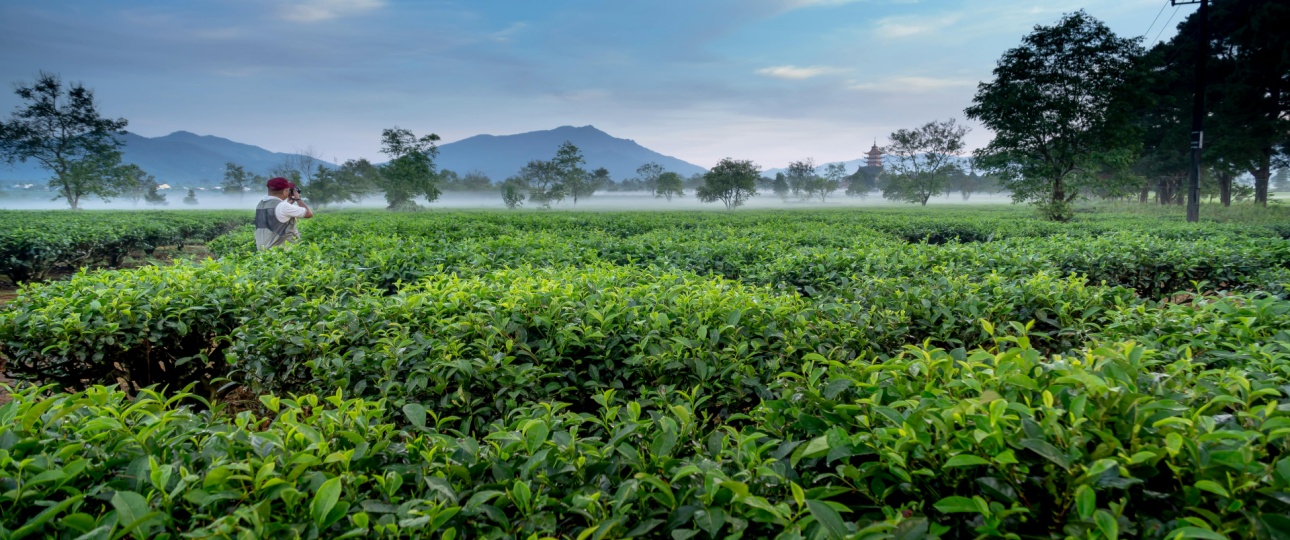
Drive approximately 1.5 hours through terraced tea mountains to reach an ecological tea garden, where a local tea master will guide you through the terroir that gives Tieguanyin its distinctive character. Walk among the tea bushes, learn the art of plucking the tender "one bud, two leaves," and participate in a formal tea ceremony in a mountainside pavilion. Depending on the harvest season, you may also observe or participate in the tea processing.
Lunch is a traditional Hakka meal at the tea garden. Return to Quanzhou in the late afternoon.
Accommodation: Quanzhou Fengze Marriott Fairfield Hotel
Meals Included: Breakfast, Lunch
Morning visit to Jiuri Mountain, a UNESCO World Heritage site on the northern outskirts of Quanzhou. Its significance lies not in architecture but in epigraphy: the cliff face is carved with 78 stone inscriptions recording "prayers for favorable winds" — ritual ceremonies performed by officials before dispatching maritime trade missions across the South China Sea. These carvings, dating from the 12th to 13th centuries, are the only surviving physical records of the ancient Chinese practice of sacrificing to the wind gods before ocean voyages.
The afternoon and evening are free for independent exploration. Your guide can suggest additional sites or leave you to wander.
Accommodation: Quanzhou Fengze Marriott Fairfield Hotel
Meals Included: Breakfast
A full free day for independent exploration and shopping. Your guide will recommend:
- Zhongshan Road, Quanzhou's historic arcaded commercial street, recently renovated and awarded the China Construction Engineering Luban Prize for its restoration
- Local specialty shops for Anxi Tieguanyin tea, Dehua white porcelain, Quanzhou puppets, and traditional lacquerware
- The streets around Kaiyuan Temple for incense, wood carvings, and Buddhist art
In the evening, gather for a farewell dinner at a carefully selected local restaurant, featuring Quanzhou's refined Minnan cuisine.
Accommodation: Quanzhou Fengze Marriott Fairfield Hotel
Meals Included: Breakfast, Farewell Dinner
A relaxed final morning. Enjoy a leisurely breakfast at the hotel. Depending on your flight schedule, you may have time for a last walk or simply a quiet coffee.
At the appointed time, a private vehicle transfers you to Quanzhou Jinjiang International Airport for your departure flight. The airport operates direct international flights to Kuala Lumpur, Manila, Bangkok, and Singapore, with convenient onward connections to North America and Europe.
Meals Included: Breakfast
Includes/Excludes
Cost Includes
- 11 nights' accommodation at five-star international-brand hotels (Waldorf Astoria Xiamen, 2 nights; Quanzhou Fengze Marriott Fairfield Hotel, 9 nights)
- Daily breakfast
- Welcome dinner (Day 1) and farewell dinner (Day 11)
- Private English-speaking guide throughout the journey, with specialized knowledge of Quanzhou's maritime history, religious heritage, and tea culture
- All intercity transfers in a private air-conditioned vehicle, including airport arrival and departure transfers
- High-speed rail: Nanjing → Quanzhou (Day 3, first class)
- Private ferry to Gulangyu Island (Day 2)
- All entrance fees to listed scenic areas and UNESCO World Heritage sites
- Tieguanyin tea ceremony and Hakka lunch in Anxi (Day 9)
- Private Nanyin and marionette performance (Day 6)
- 24/7 local operations support
Cost Excludes
- International airfare to and from China
- Chinese visa fees (a standard L tourist visa is required; we provide an invitation letter and full documentation package and can assist with the application process)
- Lunches and most dinners (except where specified)
- Personal expenses (laundry, mini-bar, telephone charges, alcoholic beverages beyond those served at included meals)
- Tips for guides and drivers (discretionary; customary guidelines provided in your pre-departure packet)
FAQs
Quanzhou was the largest port in the medieval world and the starting point of the Maritime Silk Road. Unlike Beijing, Xi’an, or Nanjing — imperial capitals defined by political power — Quanzhou was a merchant city shaped by centuries of peaceful coexistence between Buddhist, Islamic, Hindu, Christian, Manichaean, and Daoist communities. Its UNESCO World Heritage inscription covers an entire urban fabric of 22 sites, not a single monument. You walk through a living city where stone bridges built a thousand years ago still carry traffic, and where the oldest mosque in China stands five minutes from a Confucian temple.
No. This route involves minimal walking compared to mountain or Great Wall itineraries. Gulangyu Island involves walking on paved lanes with gentle slopes. The Nanjing Tulou visit involves walking on flat earthen paths between the roundhouses. Quanzhou Old City (Day 5) involves walking approximately 4 kilometers spread over 6–7 hours, with frequent rest stops, a sit-down lunch midway, and the option to return to the hotel by private vehicle at any time. Anping Bridge is flat and paved. Jiuri Mountain involves a short path to the cliff face. Comfortable walking shoes are recommended, but no hiking or climbing is required.
Quanzhou Jinjiang International Airport operates direct international flights to Kuala Lumpur, Manila, Bangkok, and Singapore. For North American travelers, the most practical routing is to connect via one of these Asian hubs, or fly into Xiamen Gaoqi International Airport — which has broader international connections — and take a 25-minute high-speed train to Quanzhou. We will meet you at either airport.
Yes. The Anxi tea garden visit is not a staged tourist show — it takes place at a working ecological tea farm where Tieguanyin has been cultivated for generations. The tea ceremony is conducted by the farmer, not a performer, and the tea you taste is the same tea sold locally. You will walk through actual tea terraces and, depending on the harvest season, may observe or participate in the plucking and processing.
October through April is ideal. Autumn brings golden light and mild temperatures (15–25°C). Spring is lush and green, with fresh Tieguanyin harvests. Summer is hot and humid with occasional typhoon rains, though all sites remain accessible. Winter is mild by North American standards (8–16°C) and blessedly uncrowded.
Yes. Your luggage travels with you in the private vehicle to the Nanjing Tulou and then onward to Nanjing Railway Station. There is no need to store luggage — the same vehicle and driver accompany you throughout the day until you board the high-speed train to Quanzhou.
All listed hotels have Western-style toilets. Major scenic areas — Gulangyu, Nanjing Tulou, Kaiyuan Temple, the Maritime Museum — have Western-style facilities. In older neighborhoods and some small public areas in Quanzhou’s Old City, squat toilets may still be encountered. Bring your own toilet paper and hand sanitizer.
No. These services are blocked in mainland China. We recommend activating an international roaming plan with your home carrier or purchasing a travel eSIM (such as Airalo) that supports China data before departure. For maps, Apple Maps or Amap work well. For translation, DeepL or the built-in tools in Alipay and WeChat are reliable.
None. All entrance fees, guide services, transportation, and meals specified in the itinerary are included. Lunches and most dinners are at your own expense. There are no mandatory shopping stops or optional excursions.
Yes. This 12-day itinerary can be shortened to 10 or 8 days by reducing the Quanzhou segment, though we recommend the full 12 days for the narrative arc from the Tulou hinterland to the maritime world. If a shorter version is preferred, please inquire at time of booking, and we will tailor the itinerary accordingly.
No. The macaques around Cao’an Temple are accustomed to visitors but are not aggressive. As with any wildlife encounter, do not feed them, keep bags closed, and avoid sudden movements.
Not much. Alipay and WeChat Pay are ubiquitous in China. Major international credit cards can now be linked to both platforms — no Chinese bank account required. We recommend setting this up before your trip. Carry a small amount of RMB for occasional street vendors who may not accept digital payments.
Yes. We can fully accommodate vegetarian, vegan, gluten-free, halal, and other dietary requirements. Please inform us of any restrictions at least 2 weeks before departure, and we will arrange appropriate meals at all included restaurants and provide recommendations for local eateries that meet your needs.
While this is a low-intensity itinerary with minimal physical activity, we always recommend that international travelers carry comprehensive travel insurance to cover unexpected disruptions such as flight delays, lost luggage, or last-minute trip cancellations. If you do not already have a policy, we can provide a list of reputable providers that specialize in travel to China at your request.